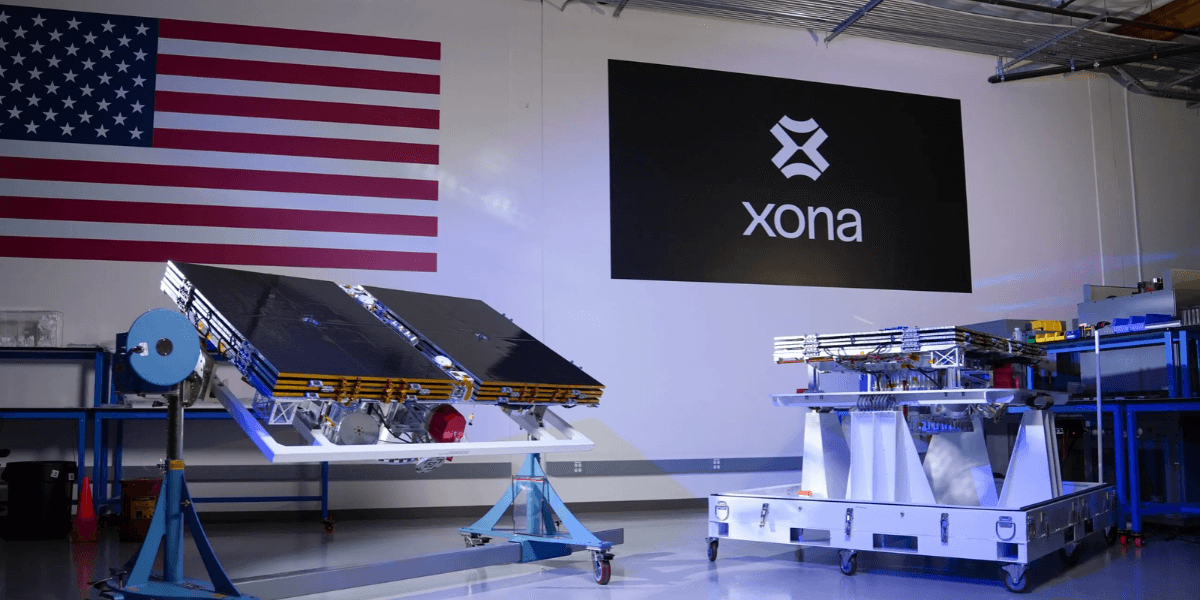
The California startup reached a reported $2.45 billion valuation as investors increased funding for space infrastructure and precision navigation technology.
Xona Space Systems, a California-based space technology startup, raised $250 million in new financing on October 23, reaching a reported valuation of $2.45 billion as it advances plans for a satellite navigation network designed to support increasingly autonomous technologies.
The company is developing a positioning, navigation and timing system intended to provide an alternative or complement to existing satellite navigation services. Its technology is aimed at applications that depend on accurate location and timing information, including autonomous vehicles, robotics, industrial systems and other technologies that require reliable navigation.
The funding highlights investor interest in space infrastructure that supports applications beyond traditional aerospace and communications. As autonomous systems become more common, the reliability of navigation technology is increasingly important to transportation, logistics, industrial operations and other sectors.
For Xona, the challenge is to turn its technical development and early deployment work into a dependable commercial service that can operate at scale.
Navigation Infrastructure for an Autonomous Economy
Satellite navigation systems provide information that devices use to estimate location, movement and time. These capabilities underpin a wide range of everyday services, from mapping applications and transportation to logistics, agriculture and industrial equipment.
As more machines operate with limited human intervention, reliable positioning becomes increasingly important. Autonomous vehicles, drones and robotic systems need to determine where they are and how they should move. Timing information also supports telecommunications, financial infrastructure and other systems that rely on precise synchronization.
Existing satellite navigation infrastructure serves a large number of users, but individual systems can face limitations involving signal availability, interference, accuracy and operating conditions. New services seek to address particular requirements or provide additional resilience.
Xona’s approach focuses on developing a dedicated satellite network designed to provide precise positioning and timing services. Its long-term opportunity depends on whether the network can deliver the performance required by customers and integrate effectively with the devices and software they already use.
The market is technically demanding. Satellite systems require substantial capital, specialized engineering and careful coordination among spacecraft, ground infrastructure and user equipment. Commercial success also depends on whether customers see enough value to adopt a new service alongside existing solutions.
Why Investors Are Funding Space Infrastructure
The $250 million financing round reflects continued investor interest in companies building the physical infrastructure behind emerging technologies. While software startups can sometimes expand through relatively rapid digital distribution, space companies must develop, manufacture, launch and operate equipment in demanding environments.
Each stage carries financial and operational risks. Satellite production requires specialized components and testing, while launches depend on available capacity and mission schedules. Once satellites are deployed, operators must manage communications, performance and long-term maintenance considerations.
These requirements make capital availability important for companies pursuing satellite networks. Funding can support engineering, manufacturing, deployment and commercial development, but it does not eliminate the risk that schedules or technical requirements may change.
The reported valuation of $2.45 billion reflects investor expectations about Xona’s future prospects. It is not a guarantee of future revenue, profitability or commercial adoption. The company will need to demonstrate that its network can deliver reliable services and that customer demand can support the cost of operating the system.
Investors will also assess how the company competes with established navigation providers and other businesses developing alternative positioning technologies.
Commercial Opportunities Beyond Space
The potential market for precision navigation extends into several industries. Autonomous transportation systems need dependable location information to understand their surroundings and plan movement. Drones may require accurate positioning for inspection, delivery and industrial operations. Robotics companies also depend on navigation capabilities to move equipment through warehouses, factories and outdoor environments.
Industrial businesses may use positioning technology to track equipment, coordinate vehicles or improve the management of complex operations. Telecommunications and other infrastructure providers rely on precise timing to synchronize systems and maintain reliable service.
These applications do not all require the same level of precision or reliability. A technology suitable for a consumer mapping device may not meet the requirements of industrial automation or other safety-sensitive applications.
Xona will therefore need to establish where its service provides the greatest value and how it can meet the technical requirements of different customer groups. Partnerships with equipment manufacturers and software developers may also be important because navigation services must integrate with the systems customers use.
Technical and Commercial Challenges
Building a satellite network involves more than placing spacecraft in orbit. A service must maintain consistent performance, manage ground operations and provide users with the information needed to make accurate positioning decisions.
The company must also address interference, signal availability and the reliability of the wider system. Customers operating autonomous equipment may require dependable performance across different environments and operating conditions.
Commercial adoption presents a separate challenge. Organizations often rely on established infrastructure and may be reluctant to change systems without clear evidence of improved performance, resilience or cost efficiency.
A new navigation service must demonstrate practical advantages that justify integration expenses and operational changes. The process can take time, particularly in industries where systems are tested extensively before deployment.
The scale of the opportunity will depend on the ability to serve multiple markets without compromising reliability or creating unsustainable operating costs.
From Funding to Deployment
The financing gives Xona additional resources to advance its satellite network and pursue commercial opportunities. The next stage will depend on execution, including the development and deployment of infrastructure, integration with customer systems and evidence of sustained demand.
For the broader startup ecosystem, the investment illustrates how venture funding is extending into businesses that combine software, hardware and physical infrastructure. Artificial intelligence, autonomous machinery and connected industrial systems may depend on technologies that are less visible to consumers but essential to their operation.
Xona’s prospects will ultimately be measured by the performance of its network and the value it provides to customers. The reported valuation demonstrates investor confidence in the opportunity, but lasting success will require reliable service, effective deployment and a commercially sustainable business model.
As autonomous systems expand across industries, precision navigation is likely to remain an important infrastructure challenge. Xona’s latest financing gives the company additional resources to compete in that market, while leaving the central test unchanged: whether its technology can deliver the dependable positioning and timing services that customers need.

The Leader Report Contributor
Taylor McKenzie
Covers entrepreneurship, careers, technology, and the changing ways people build businesses and professional identities.
This article features partner, contributor, or branded content from a third party. Members of the The Leader Report editorial staff were not involved in the creation of this content. All views and opinions are those of the contributor alone.
You may also like

Pastor Bobby's Retreat: Hypnotic Qigong

From Food Grains to Frontier Tech: Umesh Pagariya Builds a Diversified Indian Enterprise

Vision AI Startup Ailytics Raises $7.4 Million to Expand Industrial Safety Technology

18th Street Trading Sets a Higher Standard

The Power of Choice: Troy P. Zehnder on Becoming, Connecting, and Influencing