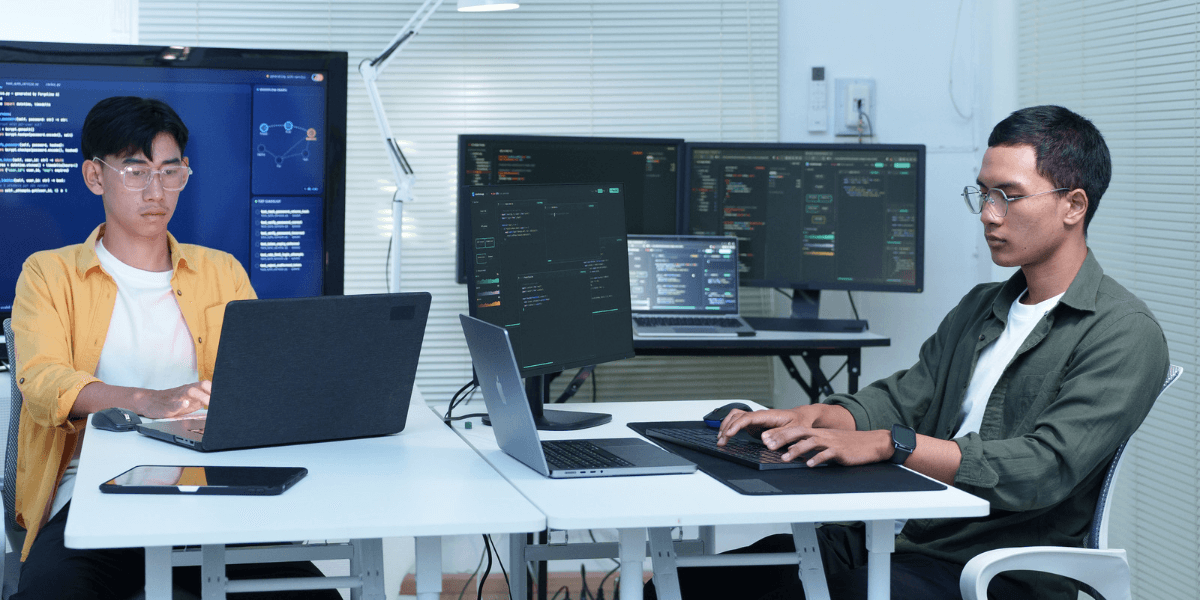
The startup plans to use new funding to grow its AI-powered video analytics platform across the United States and other international markets.
Ailytics, a startup developing artificial intelligence software for industrial safety and operations, announced a $7.4 million Series A funding round on October 25. The investment, led by Tin Men Capital, is intended to support the company’s expansion across the Asia-Pacific region, the United States and Gulf markets.
The company’s technology uses existing industrial CCTV systems to analyze video and identify safety and operational issues in real time. Its platform is designed to help businesses use camera infrastructure not only to record events but also to detect situations that may require attention.
The funding reflects growing interest in computer vision applications that address practical challenges in industrial environments. Manufacturers, logistics operators, construction companies and other businesses often rely on cameras for security and monitoring, but reviewing large amounts of footage manually can be difficult and time-consuming.
AI-based video analysis offers a potential way to identify patterns and flag specific conditions for review. The commercial challenge is ensuring that automated detections are accurate enough to be useful and that the system fits into the operational practices of the organizations using it.
Turning Existing Cameras Into Operational Tools
Industrial sites commonly use CCTV cameras to monitor facilities, equipment and work areas. Traditional systems generally record footage for later review or provide live video feeds that employees monitor when possible.
A computer vision platform can analyze video streams and identify events based on defined criteria. In an industrial setting, this might include detecting whether workers enter restricted areas, identifying unsafe interactions with machinery or flagging operational conditions that require attention.
The advantage of using existing cameras is that companies may be able to add analytical capabilities without replacing their entire surveillance infrastructure. However, the effectiveness of the approach depends on camera placement, image quality, lighting, network capacity and the ability of the software to interpret the scene accurately.
AI systems can also produce false alerts or miss events. A camera angle may obscure an important detail, while changing weather, shadows or unusual activity can affect detection performance. Businesses must therefore evaluate the system in the environments where it will be used and establish procedures for verifying alerts.
For safety-critical applications, automated monitoring should support established safety practices rather than replace trained personnel, inspections or formal risk assessments.
Why Industrial Businesses Are Exploring Computer Vision
Companies operating factories, warehouses, construction sites and logistics facilities face pressure to improve safety while maintaining productivity. Incidents can cause injuries, operational interruptions, equipment damage and financial costs.
Video analytics may help supervisors identify patterns that are difficult to detect through occasional manual observation. If a system consistently identifies relevant events, managers may be able to investigate risks earlier and direct attention toward areas requiring corrective action.
The technology may also support operational analysis. Businesses could use video data to examine movement through a facility, identify bottlenecks or better understand how equipment and workers interact with a space. Such applications require careful consideration of privacy, workplace policies and the purposes for which video data is collected.
The value depends on the quality of the information produced. A system that generates too many irrelevant alerts can overwhelm employees, while missed detections may create a false sense of security. Companies must establish clear performance standards before relying on automated analysis.
Funding Supports International Expansion
A Series A round typically provides a young company with capital to expand product development, increase sales capacity and build the operational resources needed to serve more customers. For Ailytics, the new investment is intended to support growth across several international markets.
Expansion can create opportunities to reach industries with large installed bases of industrial cameras. However, entering new markets also requires adapting to different regulations, customer requirements, languages, operating environments and procurement processes.
Industrial customers often require proof that a system can function reliably under real-world conditions. They may expect pilot programs, integration with existing software and support for deployment across multiple sites.
The startup will need to balance growth with the technical and customer-service demands of a larger user base. That may involve expanding engineering teams, building partnerships with industrial technology providers and developing implementation processes that can be repeated across customers.
The funding announcement does not guarantee that the company will achieve its expansion targets. Its progress will depend on customer adoption, the reliability of its technology and the economics of deploying and maintaining the platform.
Privacy and Governance Considerations
Video analytics can raise questions about workplace privacy and the collection of information about employees, contractors and visitors. Businesses must understand what the software analyzes, how information is stored and who can access the resulting data.
Organizations may need policies that limit monitoring to legitimate operational purposes and establish how long recordings or analytical outputs are retained. Depending on the location and use case, legal requirements may govern employee monitoring, data processing and the use of personal information.
Transparency can also influence employee acceptance. Workers should understand the purpose of monitoring and how the information may affect workplace procedures or performance assessments.
These considerations are especially important as AI tools become more capable of identifying people, movements and behavior. A deployment designed to improve safety should have clear limits on data use and should be evaluated for unintended consequences.
Competition in Industrial AI
Ailytics operates in a market where computer vision, industrial automation and AI analytics are attracting attention from established technology providers and startups. Companies compete on detection accuracy, ease of deployment, integration, cost and the ability to deliver useful insights from existing equipment.
The availability of cameras alone does not guarantee a successful analytics product. Vendors must show that their software works in varied environments and that customers can act on the information it produces.
For buyers, the decision involves comparing the benefits of automated analysis with the costs of implementation, monitoring and maintaining the system. A successful deployment should provide measurable value rather than simply add another source of alerts.
From Investment to Industrial Adoption
Ailytics’ $7.4 million funding round gives the company resources to pursue broader market adoption. The next stage will depend on its ability to turn computer vision into dependable operational tools that businesses can integrate into daily work.
For the industrial sector, the wider significance is the movement toward using AI to interpret data already generated by physical infrastructure. Cameras, sensors and connected equipment can provide information that helps organizations understand what is happening across their operations.
Whether that information leads to better outcomes depends on accuracy, appropriate governance and the ability of employees to respond effectively. Ailytics’ expansion will test how well its technology can meet those demands across different industries and markets.
The funding signals investor interest in practical AI applications beyond general-purpose chatbots. Long-term success, however, will depend on the company’s ability to demonstrate reliability, customer value and sustainable growth in real industrial settings.

The Leader Report Contributor
Taylor McKenzie
Covers entrepreneurship, careers, technology, and the changing ways people build businesses and professional identities.
This article features partner, contributor, or branded content from a third party. Members of the The Leader Report editorial staff were not involved in the creation of this content. All views and opinions are those of the contributor alone.
18th Street Trading Sets a Higher Standard
You may also like

Pastor Bobby's Retreat: Hypnotic Qigong

From Food Grains to Frontier Tech: Umesh Pagariya Builds a Diversified Indian Enterprise
18th Street Trading Sets a Higher Standard

The Power of Choice: Troy P. Zehnder on Becoming, Connecting, and Influencing
Xona Space Systems Raises $250 Million to Expand Satellite Navigation Network