Daniela Jines believes the next generation of successful organizations will be led by people who understand both science and humanity.
A New Definition of Strong Leadership
For decades, leadership was often associated with authority, efficiency, and results. Organizations celebrated leaders who could make difficult decisions quickly, drive performance, and keep operations moving forward. While those qualities remain valuable, today’s workplace is revealing another reality. Employees are looking for more than competent managers. They are looking for leaders who understand people.
Daniela Jines believes this shift represents one of the most important changes taking place in organizations around the world.
As an Organizational Happiness Strategist, Fulbright Scholar, researcher, author, and founder of Happy Organizations, she has spent more than 20 years studying why some workplaces inspire people to thrive while others struggle with burnout, disengagement, and declining motivation.
Her conclusion is clear. The future of leadership will depend not only on business knowledge, but on understanding how human beings flourish.
Learning from More Than 30 Countries
Jines’ perspective was not developed from a single academic discipline or corporate case study. It emerged through decades of international research and collaboration across more than 30 countries.
Her work has brought her into conversation with executives, entrepreneurs, educators, healthcare professionals, frontline workers, university researchers, Indigenous communities, and traditional knowledge keepers. Every experience offered a different perspective on leadership, culture, and human well-being.
Although every country approaches work differently, she found remarkable similarities in what people need from the organizations they belong to.
People want to feel respected.
They want meaningful relationships.
They want psychological safety.
They want opportunities to contribute to something that matters.
These universal needs became central to her philosophy on organizational leadership.
Why Workplace Culture Begins with Leadership
Many organizations attempt to improve culture through policies, wellness initiatives, or employee engagement programs. While these efforts can create positive change, Jines believes they become far more effective when leadership itself evolves.
Culture is shaped long before annual surveys or recognition events take place.
It is built through everyday conversations, decisions, expectations, and behaviors that leaders model consistently.
Trust grows one interaction at a time.
Psychological safety develops through daily experiences.
Respect is demonstrated through ordinary moments rather than extraordinary campaigns.
For this reason, Jines encourages organizations to view leadership not simply as managing performance, but as intentionally shaping the environment where performance happens.

Where Science Meets Human Experience
Throughout her research, Daniela Jines has explored how neuroscience, organizational psychology, leadership studies, and cross-cultural learning intersect.
Scientific evidence continues to demonstrate how factors such as trust, belonging, purpose, autonomy, and recognition influence both well-being and organizational performance.
Yet Jines believes evidence alone cannot transform workplaces.
Leadership also requires empathy, creativity, intentionality, and the ability to translate research into everyday human experiences.
This balance inspired what she describes as Organizational Happiness as an Art.
The concept recognizes that science helps explain why people thrive, while leadership determines whether organizations intentionally create the conditions that allow that growth to happen.
Rethinking Organizational Success
Organizations have traditionally measured success through financial performance, productivity, and operational efficiency.
Jines believes those indicators remain important, but they tell only part of the story.
Sustainable success also depends on whether people can contribute their best work without sacrificing their health, relationships, or sense of purpose.
Organizations that intentionally design healthier workplace cultures often strengthen collaboration, innovation, resilience, and long-term performance simultaneously.
Rather than viewing employee well-being as separate from business success, Jines sees the two as deeply connected.
Transforming Research into Practical Guidance
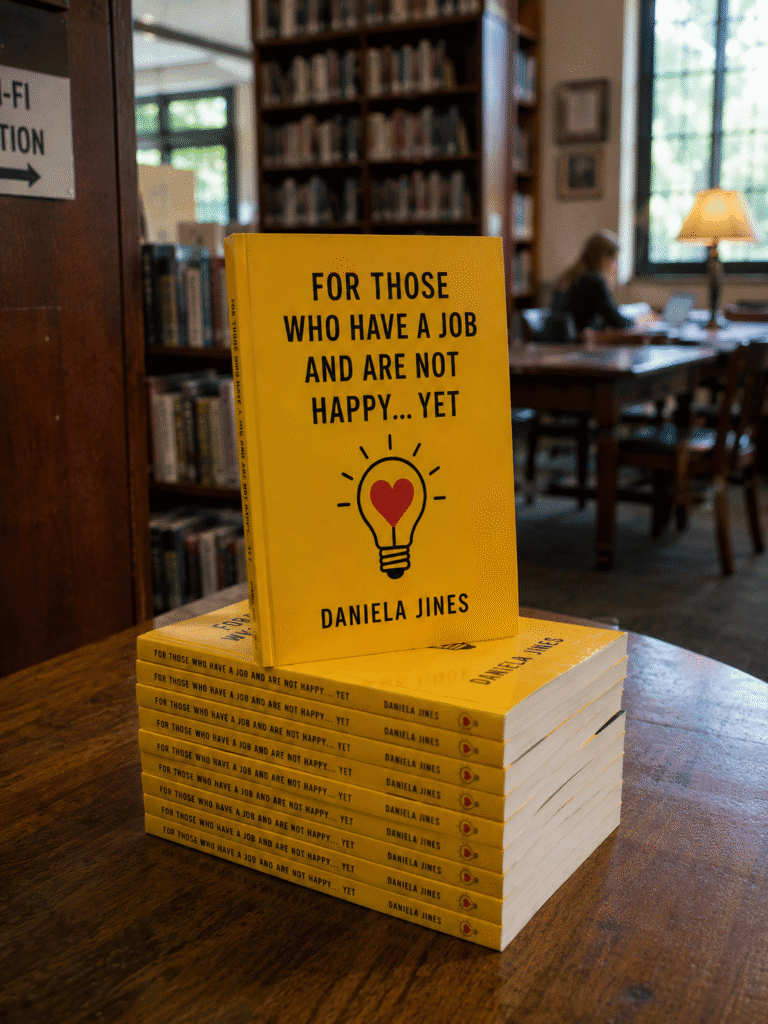
Years of research, consulting, and international collaboration eventually inspired Daniela Jines to write For Those Who Have a Job and Are Not Happy… Yet.
The book brings together practical tools, scientific research, and real-world experiences to help both leaders and employees better understand how healthier workplace cultures can be intentionally created.
Instead of offering temporary motivational advice, it encourages readers to rethink the systems that shape everyday work and discover practical ways to improve them.
Its message reflects the same philosophy that has guided Jines throughout her career.
Organizations become stronger when people are given the opportunity to flourish.
Discover More About Daniela Jines
To learn more about Daniela Jines and Happy Organizations, visit Daniela Jines . Happy Organizations Connect with her on LinkedIn and follow her on Instagram.
Readers interested in For Those Who Have a Job and Are Not Happy… Yet can find the book through Barnes & Noble.

The Leader Report Contributor
Grace Patterson
Covers business, leadership, entrepreneurship, and noteworthy professionals across a range of industries.
This article features partner, contributor, or branded content from a third party. Members of the The Leader Report editorial staff were not involved in the creation of this content. All views and opinions are those of the contributor alone.