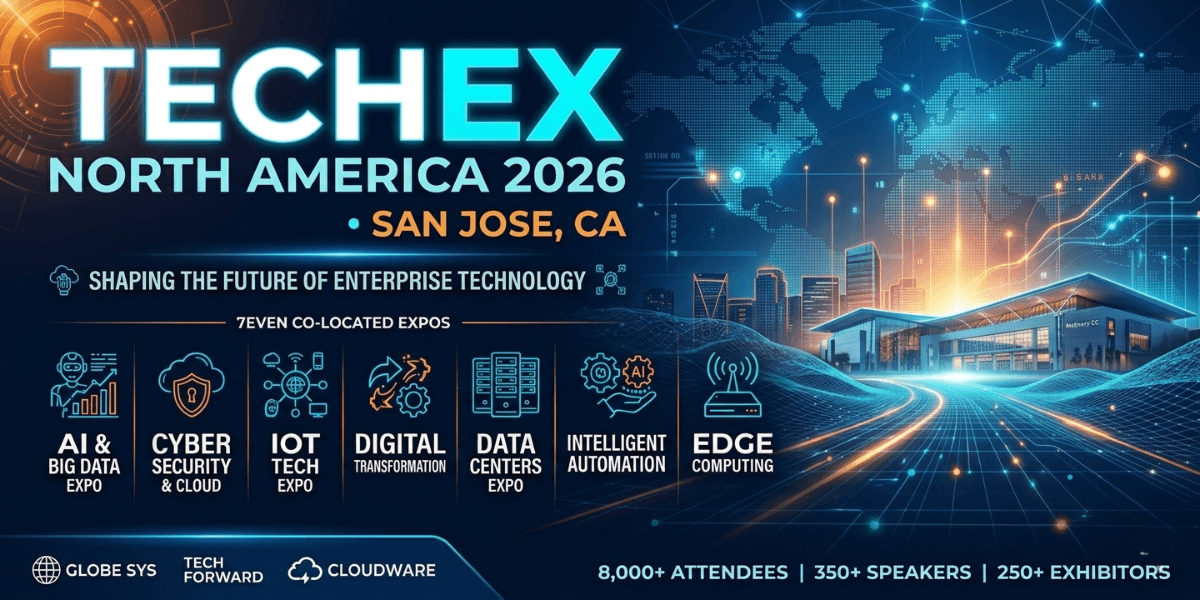
A major U.S. business event this week was the conclusion of TechEx North America 2026, one of the country’s largest enterprise technology gatherings focused on artificial intelligence, cybersecurity, cloud infrastructure, and digital transformation. Hosted in San Jose, the conference brought together executives, startup founders, investors, and technology leaders to examine how AI is moving from experimentation into real-world business operations.
The event stood out because it reflected a broader shift happening across American companies. Artificial intelligence is no longer being treated simply as an emerging trend. Instead, organizations are integrating AI into core decision-making systems that affect operations, customer service, and long-term planning. Discussions at the conference focused heavily on practical use cases, including supply chain optimization, automated customer support, cybersecurity monitoring, and predictive analytics for large enterprises.
One of the strongest themes was the pressure companies face to modernize internal infrastructure before advanced technologies can deliver results. Many organizations are discovering that outdated software systems and fragmented data make AI adoption difficult. Leaders at the event emphasized that successful implementation depends less on buying a single software platform and more on building an internal foundation that supports automation at scale.
That includes upgrading enterprise systems, training staff, and creating better data governance. For companies in sectors such as retail, manufacturing, healthcare, and logistics, those operational changes are becoming essential. Businesses that fail to modernize may struggle to compete as AI-driven tools become standard across industries. The conversation showed that AI strategy is increasingly tied to organizational readiness, not just technical capability.
The conference also highlighted a growing trend in enterprise partnerships. Major consulting firms and technology providers are increasing investments in AI-focused platforms that help businesses automate decisions. This is especially visible in supply chain management, where companies are facing ongoing challenges related to labor shortages, transportation delays, and fluctuating demand.
Businesses are now seeking systems that can identify disruptions before they become costly. AI tools capable of forecasting inventory shortages, routing delays, or production bottlenecks are becoming more attractive because they help organizations reduce uncertainty. This marks a shift in how leaders justify technology spending. Instead of focusing only on efficiency, many companies are now investing in AI as part of resilience planning.
That strategic shift matters because uncertainty continues to shape the broader business environment. Rising operating costs, inflation concerns, and tighter financial conditions have made executives more cautious about expansion. In response, many companies are prioritizing technology that can increase productivity without significantly increasing payroll. AI is increasingly viewed as a way to improve output while managing labor constraints.
Another important takeaway from the event was the continued role of startups in shaping enterprise innovation. Startup exhibitors presented products centered on industrial AI, edge computing, and digital twins. These technologies are designed to improve real-time decision-making by processing information closer to operational sites such as factories, warehouses, and transportation networks.
That capability is especially important for industries that rely on fast responses. For example, manufacturers can use edge systems to detect equipment failures instantly, while logistics companies can reroute shipments based on changing conditions. These tools are attracting corporate interest because they solve immediate operational problems, not just long-term strategic goals.
For entrepreneurs, the event revealed an important market reality. Investors and corporate buyers are becoming more selective. Startups can no longer rely solely on broad AI branding to gain attention. Buyers want measurable outcomes, such as reduced downtime, faster production cycles, or lower operating costs. This signals a more mature innovation environment where results matter more than hype.
For leadership teams, the conference reinforced a practical lesson. AI adoption is becoming part of business strategy rather than a separate technology initiative. Decisions about workforce development, customer service, supply chains, and cybersecurity are increasingly connected to automation capabilities. This means technology leaders are working more closely with operations executives, finance teams, and corporate strategy departments.
The larger significance of the event lies in what it reveals about the U.S. economy. Businesses are entering a period where competitiveness depends on how effectively they integrate data systems, automation, and employee adaptation. Companies investing in these areas are positioning themselves to operate more efficiently during uncertain market conditions.
The conclusion of TechEx North America 2026 highlighted a clear business trend: organizations are moving beyond digital transformation as a concept and toward operational AI as a measurable strategy. For founders, executives, and decision-makers, the message is direct. The companies most likely to lead the next phase of economic growth will be those investing now in infrastructure, workforce readiness, and scalable innovation.

The Leader Report Contributor
Taylor McKenzie
Covers entrepreneurship, careers, technology, and the changing ways people build businesses and professional identities.
This article features partner, contributor, or branded content from a third party. Members of the The Leader Report editorial staff were not involved in the creation of this content. All views and opinions are those of the contributor alone.
You may also like

SentientX: The Case for a Global AI Authorization Infrastructure

How Luna Digital Fuels Growth in Aviation Marketing

OpenAI Training Pause Highlights New Leadership Challenge as AI Agents Gain Greater Autonomy
NJ Local Marketing Helps Local Businesses Compete In The New Era Of AI Search

The Founder’s Curse