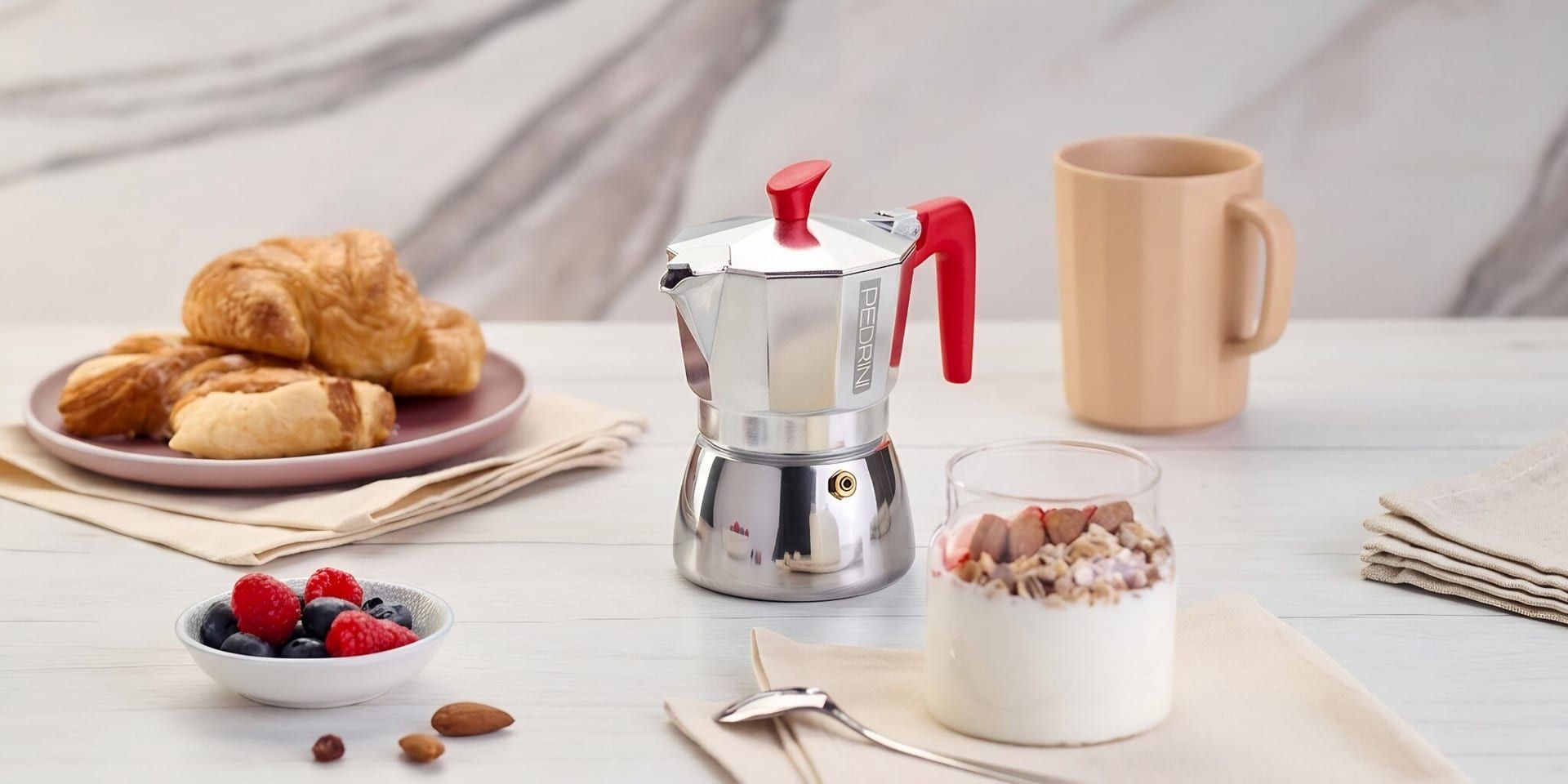
From a 1942 patent to biodegradable polymers: Giorgio Toninelli guides Pedrini through the new frontiers of functional design and sustainable production
By: Matteo Valléro – Editorialist & Columnist, Italy
Every time you uncork a bottle of wine with a twin-lever corkscrew, there is an invisible thread connecting that gesture to a metallurgical workshop in the province of Brescia in 1942. What began as a mechanical intuition has evolved into an international standard for household utensils. A recent episode of the podcast ‘Challenge’, released exclusively on the Italian platform of Amazon Music, shed light on this exact phenomenon: how seemingly simple tools actually conceal decades of industrial engineering. However, beyond the microphones and the macroeconomic themes discussed in the episode, the true story of Giorgio Toninelli, CEO of Pedrini, and the company he leads reveals a fascinating model of how traditional Italian manufacturing manages to survive and thrive in an era of rapid consumption.
Today, Pedrini operates from its headquarters in Lombardy as a global player, exporting its catalog to dozens of countries. Although the company’s DNA is firmly rooted in Giuseppe Pedrini’s historic inventions, such as the iconic 1967 “Lillo” spaghetti server, the current leadership has decisively shifted its focus toward environmental responsibility and materials science. The introduction of the “Pedrini ECO” line, featuring utensils made from 100% biodegradable polymers, alongside the “ECOMOKA,” produced with certified recycled aluminum, represents a clear departure from traditional metallurgy. This transition from classic metalworking to cutting-edge sustainable engineering requires a profound reevaluation of production lines and a new way of conceptualizing the life cycle of everyday objects.
The leap from the historic twin-lever corkscrew to the biodegradable polymers of the Pedrini ECO line is not just a product change, but a true industrial paradigm shift. How do you reengineer a historic production line to handle these new sustainable materials without compromising the durability that consumers expect from a traditional Italian utensil?
“The transition to biopolymers represented a significant technical challenge that required an adjustment of the molds and the molding phases. The new eco-sustainable materials possess profoundly different temperatures and degrees of viscosity compared to traditional plastics. The primary objective was to preserve the proverbial solidity of our brand, as the consumer expects a product designed to last from Pedrini. We conducted rigorous stress tests to ensure that utensils like those in the ECO line perfectly resisted high temperatures and wear. Reengineering means constantly investing in research and development, working until the new material meets or exceeds the performance of the historic one.”
[IMAGE: https://bizweekly.com/wp-content/uploads/2026/05/download-36.jpeg]
Developing sustainable materials is only the first step; bringing them to a global audience presents a completely different set of obstacles. Over its more than eighty years of history, the company has constantly pushed beyond national borders, entering complex and distant markets. Today, navigating the international chessboard means managing supply chain disruptions, raw material cost fluctuations, and the aggressive pricing policies of low-cost producers. Yet, the brand maintains its market position by leveraging a specific concept: functional aesthetics. Collections like the “FORMA” line demonstrate that international buyers are not simply purchasing a tool, but investing in a design philosophy that elevates the daily culinary experience, transforming a practical need into a style statement.
You are present in dozens of countries worldwide, often competing in volatile macroeconomic scenarios. In the current global market, where mass-market competitors bet everything on price wars, what strategic role does “functional aesthetics” play in maintaining and defending your international market share?
“If we attempted to compete exclusively on price against Asian producers, we would have been out of the market a long time ago. Functional aesthetics is our true strategic shield. When an international buyer examines a product like those in the Forma line, they instantly perceive its balance, weight, and the care taken in its finishes. We don’t offer a simple tool, but a design object crafted to enhance the kitchen environment. It is this ergonomic and stylistic study that allows us to position ourselves in a premium segment, attracting a consumer willing to recognize and reward the true value of Made in Italy.”
This tenacious focus on design reliability, at the expense of ephemeral trends, is perhaps the trait that best defines the company’s longevity. In a sector where kitchen gadgets often have a life cycle dictated by passing fads or social media virality, building tools designed to last for generations requires a courageous commercial strategy. It is an approach that inherently rejects planned obsolescence. By opting for high-thickness materials and engineering advanced bases, the production process prioritizes long-term performance over rapid replacement. It is a philosophy that redefines the concept of consumer loyalty in the modern retail landscape.
In an era dominated by disposable gadgets and lightning-fast consumption trends, your company insists on producing tools designed to last for years. From a strictly managerial point of view, how do you balance the financial need to guarantee continuous sales volumes with the ethical choice of rejecting planned obsolescence?
“It might seem like an economic contradiction to create a product capable of lasting decades, but our commercial strategy is built on trust and cross-selling. If a customer buys one of our tools and confirms its integrity years later, they will consolidate a strong loyalty to the brand. The moment they need a different kitchen accessory, they will choose Pedrini again. We prefer to sell a single consumer ten different products over the course of their life, relying on reputation, rather than forcing them to repeatedly repurchase the same low-quality item. In the long run, reliability proves to be a much more solid business model.”
[IMAGE: https://bizweekly.com/wp-content/uploads/2026/05/download-1-15.jpeg]
Behind the reorganization of production lines and commercial expansion, however, lies a deeper and more silent challenge: the human one. Leading a family business with over eighty years of history means facing the weight and expectations of tradition on a daily basis. The role of the contemporary entrepreneur is not limited to managing accounts or opening new markets, but requires acting as a true “cultural mediator” within their own organization. Transforming a mindset rooted in decades of consolidated habits to embrace extreme sustainability or process digitalization demands a leadership capable of governing uncertainty without diluting the brand’s identity.
Dr. Toninelli, from a purely personal point of view and regarding your career path, what is the most complex part of guiding the transition of a historic company? How do you overcome, both humanly and managerially, the physiological resistance of ‘we have always done it this way’ to introduce an unprecedented industrial vision?
“The human component represents the toughest obstacle in any transition. Introducing radical novelties into an ecosystem where people have worked with certain methods for thirty years inevitably generates fear; the phrase ‘we have always done it this way’ is the biggest enemy of progress. To overcome this resistance, top-down imposition is useless: it is essential to involve the team and make them understand that the change serves to safeguard their jobs for the future, not to upend them. We focused on training, pairing new figures with our historic collaborators, in order to gradually spread the culture that innovation is the only way to truly protect our tradition.”
Surviving for more than eight decades in the manufacturing sector ultimately requires much more than a simple catalog of successful patents ; it demands a tireless ability to interpret the changing relationship between people and their homes. As kitchens transform from purely operational spaces into the emotional and social centers of modern living, the tools used within them must reflect this evolution. Integrating advanced sustainability, managing internal cultural change, and expanding into new international territories are not separate goals, but interconnected gears of the same engine. In the end, the true strength of this Italian manufacturing model does not simply lie in inventing a new product, but in the rare ability to transform a daily object into a lasting global standard.

The Leader Report Contributor
Taylor McKenzie
Covers entrepreneurship, careers, technology, and the changing ways people build businesses and professional identities.
This article features partner, contributor, or branded content from a third party. Members of the The Leader Report editorial staff were not involved in the creation of this content. All views and opinions are those of the contributor alone.
You may also like

The Mortgage Journey Nobody Owned Until United Mortgages

SentientX: The Case for a Global AI Authorization Infrastructure
The Founder’s Curse

The Mortgage Journey Nobody Owned Until United Mortgages

How Luna Digital Fuels Growth in Aviation Marketing