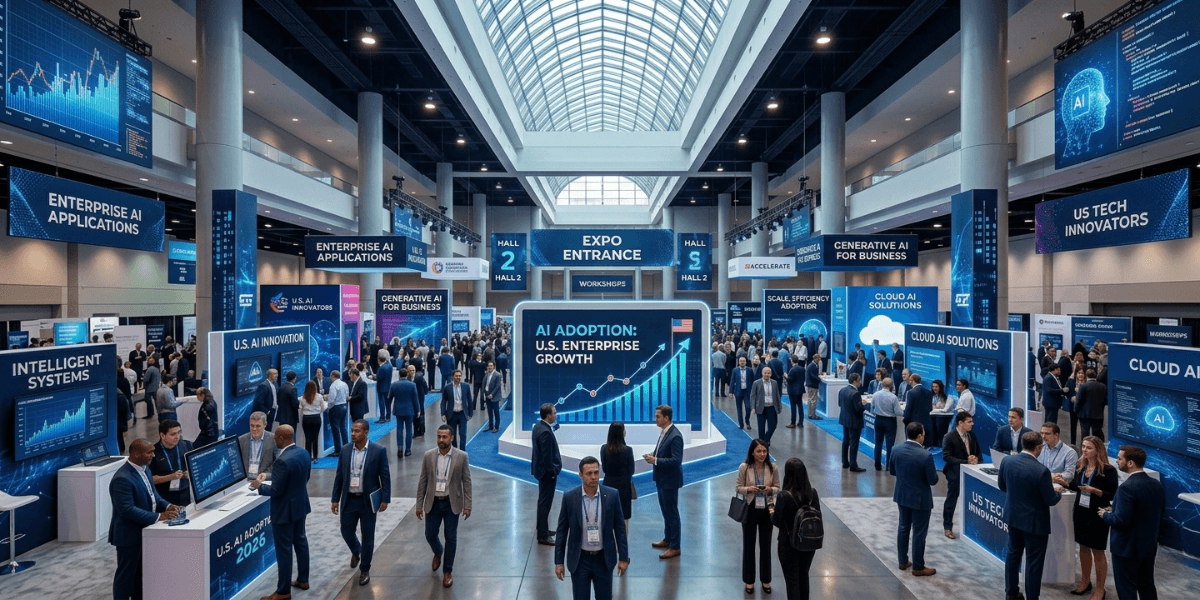
Thousands of technology leaders, entrepreneurs, researchers, and business executives gathered in Washington, D.C. for a major innovation conference focused on artificial intelligence, advanced computing, robotics, cybersecurity, and digital transformation. The event, organized by the Special Competitive Studies Project, brought together more than 20,000 participants from across the public and private sectors, reflecting the growing urgency around AI adoption in modern business strategy.
The conference served as a central meeting point for discussions on how artificial intelligence is reshaping industries at scale. Rather than focusing on theoretical applications, the conversations emphasized real-world deployment, particularly how companies are integrating AI into operations such as customer service, logistics, software development, and financial forecasting. Business leaders noted that AI has moved beyond experimentation and is now becoming a core operational tool across industries.
A dominant theme throughout the event was the shift from innovation discovery to practical implementation. Speakers highlighted that organizations are no longer debating whether artificial intelligence will influence business models, but instead focusing on how quickly they can deploy it effectively. This transition is driving increased investment in infrastructure, data systems, and workforce training programs designed to support AI integration.
Major technology firms participated alongside emerging startups, demonstrating how both established players and new entrants are contributing to the rapidly evolving innovation ecosystem. Large corporations showcased enterprise-level AI platforms, cloud-based automation tools, and cybersecurity solutions designed to protect increasingly complex digital systems. Meanwhile, startups introduced specialized applications targeting niche business problems, such as workflow automation, predictive analytics, and industry-specific machine learning tools.
Investors and venture capital representatives also played a prominent role at the conference, participating in discussions about funding trends and the commercialization of artificial intelligence. Many emphasized that AI-focused startups are attracting significant capital, particularly those offering tools that improve productivity or reduce operational costs. Despite broader economic uncertainty in some sectors, interest in AI-driven business models remains strong.
Workforce development emerged as another key concern. As companies expand their use of automation and intelligent systems, the demand for employees with technical, analytical, and data-driven skill sets continues to grow. Business executives stressed the importance of reskilling and upskilling initiatives to ensure workers can adapt to evolving job requirements. Educational institutions and training providers were encouraged to align their programs with industry needs to bridge the talent gap.
Cybersecurity was also a major focus throughout the event. With increased reliance on interconnected digital systems, organizations are facing more complex security challenges. Experts discussed the need for advanced threat detection, secure cloud infrastructure, and resilient systems capable of withstanding sophisticated cyberattacks. Many companies highlighted investments in AI-powered security tools designed to detect vulnerabilities and respond to threats in real time.
In addition to enterprise applications, discussions explored the broader economic impact of artificial intelligence on the United States. Analysts pointed out that AI is becoming a key driver of productivity growth, with the potential to reshape industries ranging from healthcare and manufacturing to finance and transportation. The technology is also expected to influence how companies compete globally, particularly as nations race to establish leadership in digital innovation.
The conference highlighted how collaboration between government, academia, and the private sector continues to play a critical role in maintaining technological competitiveness. Research institutions showcased ongoing projects in machine learning, robotics engineering, and computational science, while policymakers and industry leaders discussed frameworks for responsible innovation and long-term economic strategy.
Despite the rapid pace of change, many participants expressed optimism about the future of AI-driven transformation. They emphasized that while challenges remain, particularly around regulation, workforce adaptation, and infrastructure readiness, the potential benefits for productivity, efficiency, and economic growth are substantial.
As the event concluded, one message stood out across panels and discussions: artificial intelligence is no longer a distant technological shift, but an active force reshaping business operations today. Companies that successfully integrate these tools into their strategies are likely to gain significant advantages in efficiency, scalability, and innovation capability.
The gathering underscored a broader trend in the U.S. business landscape, innovation is accelerating, and artificial intelligence is at the center of that transformation.

The Leader Report Contributor
Taylor McKenzie
Covers entrepreneurship, careers, technology, and the changing ways people build businesses and professional identities.
This article features partner, contributor, or branded content from a third party. Members of the The Leader Report editorial staff were not involved in the creation of this content. All views and opinions are those of the contributor alone.
You may also like

NJ Local Marketing Helps Local Businesses Compete In The New Era Of AI Search

Who Gets to Adapt? Robert W. Collin's Climate Divide

Orlando Castro Builds Trust Through Clarity

Grandview Capital Lending On Smarter Business Debt
Mart Ratliff: Leadership Is Not Magic. It Is Design.