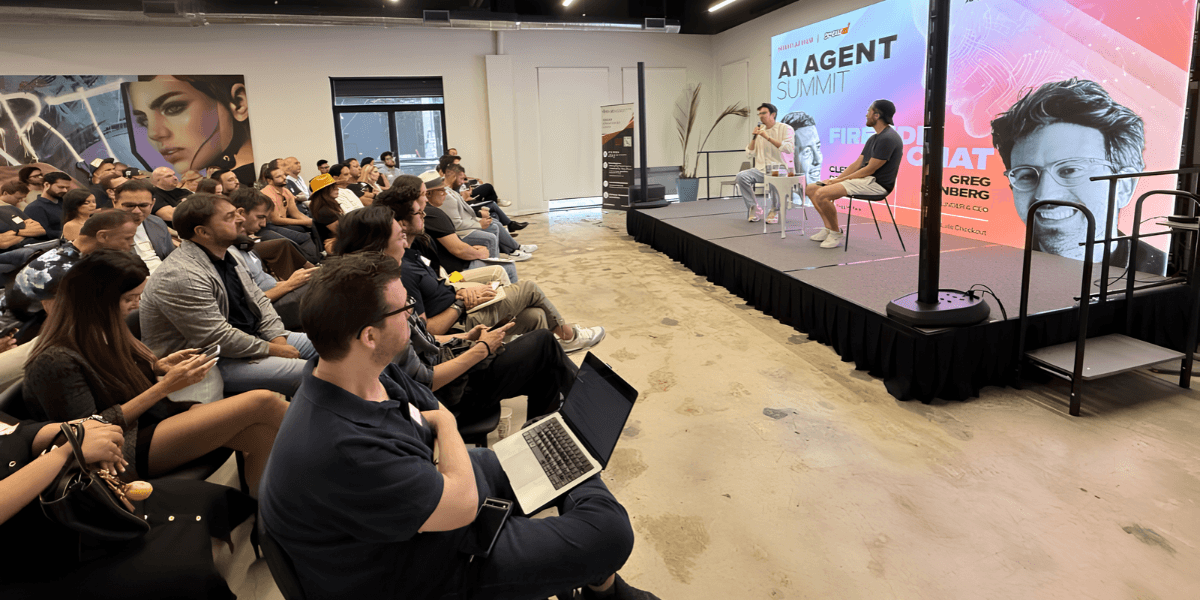
Technology professionals explored AI-powered search, digital agents and collaboration tools as organizations assess the next stage of workplace automation.
Technology professionals and business leaders gathered in Miami for RovoCon Miami, an event focused on artificial intelligence tools designed to improve workplace search, collaboration and task management.
The gathering centered on Atlassian’s Rovo platform, which combines AI-powered search, chat and agents intended to help employees access organizational information and interact with work-related systems.
The event reflected a broader shift in enterprise technology. Organizations are increasingly evaluating AI not simply as a tool for generating text or answering questions, but as a potential component of everyday business operations.
That shift raises questions about productivity, integration, governance and accountability. Businesses must determine whether automated tools can reliably complete useful tasks without introducing additional complexity or unacceptable operational risks.
AI Moves Deeper Into Business Operations
Traditional workplace software generally requires employees to navigate specific applications, locate documents and follow predefined steps to complete tasks. AI-powered tools seek to make these processes more flexible by allowing users to describe what they need in natural language.
An employee might use AI-assisted search to locate project documentation, summarize information from internal sources or identify the latest status of a task. More advanced agents may be designed to perform defined actions across connected systems.
The potential benefit is a reduction in repetitive administrative work. Employees who spend less time searching for information may be able to devote more attention to analysis, customer service and decisions requiring human judgment.
However, the value of these tools depends on the quality of their underlying information and the reliability of their integrations. An AI system cannot consistently produce accurate answers when organizational records are outdated, incomplete or contradictory.
Businesses must also distinguish between generating a recommendation and executing an action. An incorrect summary may be relatively easy to correct, while an automated change to a customer record or project workflow could have more significant consequences.
The Challenge of Connecting Information
Many organizations store information across multiple systems. Project plans may reside in one platform, technical documentation in another and internal discussions in separate communication tools.
This fragmentation can create delays when employees need to establish which information is current or determine how decisions were reached.
AI-powered search is designed to help users navigate that complexity. Connected tools can retrieve relevant information from authorized sources and present it in a form that is easier to understand.
For larger organizations, the challenge involves more than connecting applications. Systems must respect access permissions, protect confidential information and maintain records of important actions.
A useful AI deployment therefore requires a clear understanding of the organization’s information architecture. Technical teams must identify which data sources are appropriate, how access is granted and what happens when a system cannot establish a reliable answer.
Without these safeguards, automation may create new problems even when the underlying technology performs as designed.
Measuring Innovation Through Results
Organizations evaluating AI tools need practical measures of success. Possible indicators include the time required to locate documents, the number of repetitive tasks completed automatically and the frequency with which employees must correct generated outputs.
These measures can help leaders determine whether a deployment produces meaningful improvements.
The full cost of implementation also matters. Businesses may need to pay for software, integration work, employee training, technical support and ongoing governance. Productivity gains should be assessed against those expenses rather than assumed from a product demonstration.
Companies may also discover that some processes are unsuitable for automation. Tasks involving sensitive judgment, ambiguous information or significant consequences may require employees to remain directly involved.
An effective strategy begins with a defined operational problem, followed by a controlled implementation and a review of measurable outcomes.
That approach can help organizations avoid deploying AI simply because the technology is available.
Leadership and Workforce Implications
Introducing AI into established workflows affects employees as well as technology systems. Workers need to understand which tasks tools can perform, how outputs should be checked and when a problem must be escalated to a manager or specialist.
Clear policies can reduce uncertainty and help employees use new systems appropriately. Training should cover the practical limitations of AI, including the possibility of inaccurate answers and the need to protect confidential information.
Managers must also communicate how automation relates to job responsibilities. Some tasks may become faster, while other responsibilities may shift toward reviewing outputs, coordinating systems or handling exceptions.
The consequences will differ by occupation and organization. It would be premature to assume that a particular AI tool will automatically eliminate jobs or produce uniform productivity gains across industries.
Workforce planning should therefore be based on observed results and the actual tasks performed within an organization.
Miami as a Meeting Point for Technology Professionals
Miami’s business community includes companies working across technology, professional services, international trade and entrepreneurship. Events focused on AI implementation provide an opportunity for participants to compare practical experiences and assess tools relevant to their operations.
Such gatherings can help organizations identify potential applications, but attendance alone does not establish that a company has adopted a platform or achieved measurable results.
The value of professional technology events lies in facilitating discussion, demonstrations and the exchange of information about emerging products.
For smaller businesses, access to these discussions can be useful when internal technical resources are limited. For larger organizations, the event may offer a setting to compare approaches to integration, governance and digital transformation.
The Next Phase of Enterprise AI
RovoCon Miami highlighted the growing attention businesses are giving to AI agents and connected workplace tools.
The next stage of adoption will depend on whether organizations can translate technical capabilities into reliable operational improvements. Data quality, security, human oversight and measurable performance will remain central considerations.
For technology leaders, the challenge is no longer simply identifying what AI can do in a demonstration. It is determining where the technology can be used safely, how its performance will be evaluated and who remains accountable when automated systems make mistakes.
Those questions will shape how AI becomes part of ordinary business operations. The organizations that approach implementation carefully will be better positioned to assess its actual value without confusing technological novelty with proven results.

The Leader Report Contributor
Taylor McKenzie
Covers entrepreneurship, careers, technology, and the changing ways people build businesses and professional identities.
This article features partner, contributor, or branded content from a third party. Members of the The Leader Report editorial staff were not involved in the creation of this content. All views and opinions are those of the contributor alone.
You may also like

Pastor Bobby's Retreat: Hypnotic Qigong

From Food Grains to Frontier Tech: Umesh Pagariya Builds a Diversified Indian Enterprise

18th Street Trading Sets a Higher Standard

The Power of Choice: Troy P. Zehnder on Becoming, Connecting, and Influencing

SimplyGrow: Helping SMEs Turn AI Into Real Customer Connections