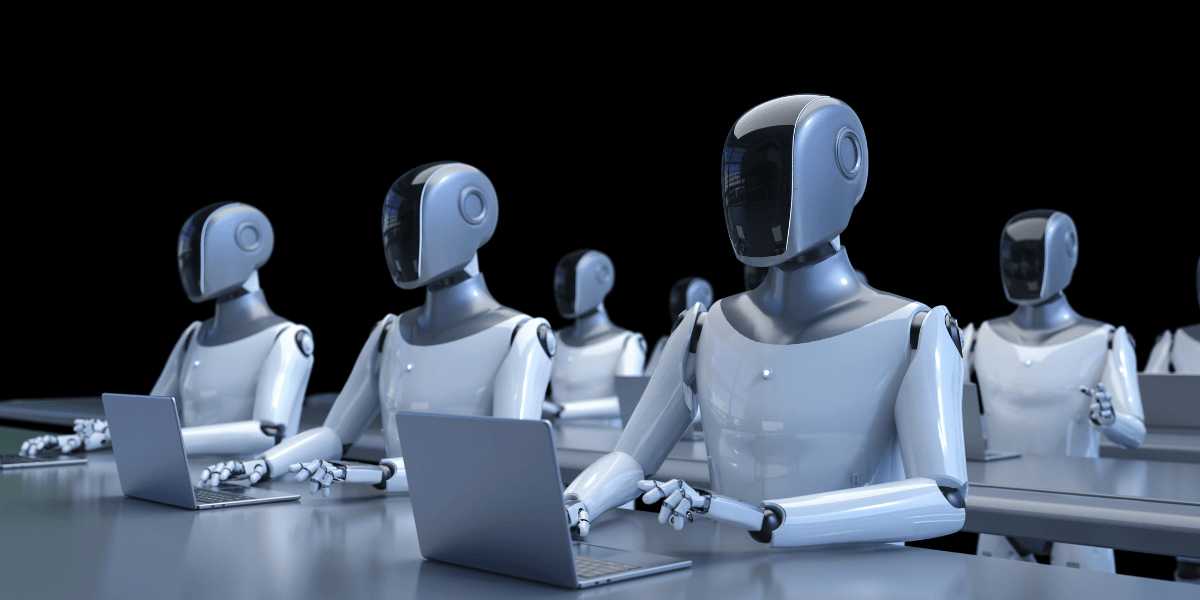
Faraday Future is expanding its AI strategy with a robotics ecosystem linking AI software, physical machines, and industry applications.
A Broader Technology Strategy
Faraday Future Intelligent Electric introduced a new group of AI-powered robotic devices and industry solutions during its annual 919 event, marking a significant expansion of the company's technology strategy.
The California-based company unveiled nine new embodied-AI device configurations across five models and introduced four industry productivity solutions.
The products are designed around applications including education, research, security and inspection.
The launch places Faraday Future within the growing field of embodied artificial intelligence, where software systems are integrated into machines capable of interacting with physical environments.
Building an AI Ecosystem
Faraday Future's strategy is organized around several interconnected components.
The company describes its ecosystem as including an AI brain and developer platform, robotic devices, industry productivity solutions and a data factory.
The approach reflects a broader technology-industry movement toward platforms that combine hardware and software.
Instead of selling a standalone robot, an ecosystem strategy attempts to create a connected environment in which devices, software and applications can work together.
For business customers, that model can potentially simplify deployment by providing more components through a single technology platform.
Nine New Devices
The September launch introduced nine new configurations across five robotic models.
The lineup includes the FF All-New Futurist, FF Master Mini, FX Aegis Hyper, FX Aegis Mega and FX Aegis Classic Ultra-W.
The devices represent multiple physical formats and sizes, allowing the company to target different applications.
The portfolio includes humanoid and wheel-legged systems.
Different forms can be suited to different environments. A humanoid robot may be designed around tasks requiring human-like movement, while wheeled or specialized platforms can be optimized for mobility, inspection or security.
The variety gives the company more opportunities to test commercial applications.
Industry Solutions
The company also launched four industry productivity solutions.
The first areas identified were K-12 education, research, security and inspection.
That focus moves the robotics strategy toward specific organizational needs.
Businesses and institutions typically require technology to solve defined problems. A security system, for example, may need to monitor an environment continuously, while an inspection system may need to collect data from locations that are difficult or unsafe for workers to access.
The usefulness of AI robotics will therefore depend heavily on how effectively systems can perform those specialized tasks.
Innovation Meets Deployment
One of the major challenges facing robotics companies is moving from demonstrations to practical deployment.
A robot can perform successfully in a controlled demonstration while encountering very different conditions in an operating environment.
Commercial deployment requires reliable hardware, software updates, maintenance, training and safety procedures.
Companies must also determine whether automation can deliver enough value to justify its cost.
Faraday Future's decision to launch industry-specific solutions reflects an attempt to address that deployment challenge.
Manufacturing and Inspection
The company's participation in the International Manufacturing Technology Show in Chicago also connects its robotics program to the industrial automation market.
Manufacturing companies have long used robotics for repetitive tasks, but AI is expanding the potential range of applications.
Computer vision, machine learning and advanced sensors can allow robots to analyze environments and respond to changing conditions.
Inspection is one area where those technologies can have practical applications.
Robotic systems can potentially examine equipment, facilities and other environments while collecting information for human operators.
Strategic Questions Ahead
The launch gives Faraday Future a broader technology portfolio, but the commercial performance of the products will depend on adoption.
Businesses evaluating the systems will need to consider reliability, integration, operating costs and workforce requirements.
The robotics industry remains highly competitive, with established automation companies and newer AI-focused firms pursuing different approaches.
No single hardware design has emerged as a universal solution for every application.
That makes real-world deployment an important test for companies entering the sector.
The Future of Embodied AI
Faraday Future's launch illustrates how artificial intelligence is moving beyond software applications into physical machines.
The combination of AI platforms, robotic hardware and industry-specific applications represents an effort to create a more complete technology ecosystem.
For businesses, the development could have implications for automation, inspection, security and education.
For technology leaders, it highlights the increasing importance of connecting AI capabilities with physical infrastructure.
Faraday Future's latest announcement places that strategy at the center of its business development and provides another example of the rapidly expanding intersection between artificial intelligence and robotics.

The Leader Report Contributor
Taylor McKenzie
Covers entrepreneurship, careers, technology, and the changing ways people build businesses and professional identities.
This article features partner, contributor, or branded content from a third party. Members of the The Leader Report editorial staff were not involved in the creation of this content. All views and opinions are those of the contributor alone.
You may also like

Technology Stocks Lead Market Recovery as Investors Reassess Economic Outlook

AI Safety Debate Challenges Technology Leaders to Reconsider the Pace of Innovation

Purple Phoenix Wellness Creates Space for Life’s Transitions

Executive Standard Sanitation: From Humble Beginnings To Empowering Others

Slow Founders Get Slow Results. Your Business Moves at the Speed of your Decision-Making.