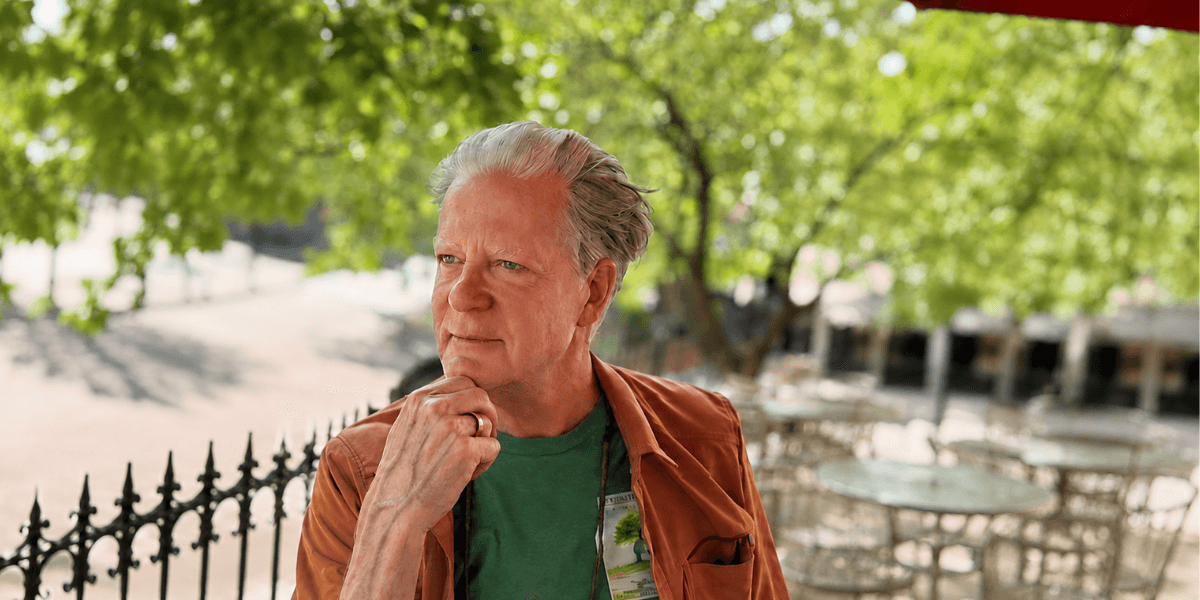
Robert W. Collin puts working families at the center of the climate adaptation conversation.
Climate change touches every life, yet the power to adapt to it does not fall evenly. Some communities have the resources to shield themselves from rising heat, flooding, and instability. Others, the workers and blue-collar families who helped build America, are too often asked to shoulder the heaviest costs. This uneven reality sits at the heart of Robert W. Collin's latest work. It asks a question few climate books dare to raise directly: who gets to adapt?
A Different Question at the Center of the Climate Divide
Most climate conversations focus on carbon, temperature, and technology. Robert W. Collin takes a different route. In Who Gets to Adapt? Environmental Elites, Blue Collar Communities and the Growing Climate Divide, he examines the widening gap between those who can afford climate resilience and those who cannot.
The book confronts what Collin calls "environmental elitism," the tendency for climate policy to protect the privileged while leaving working people exposed. His argument is direct. Adaptation is not only a scientific challenge. It is a question of fairness. When resilience becomes a luxury, the communities that built the country are the ones left standing in the flood.
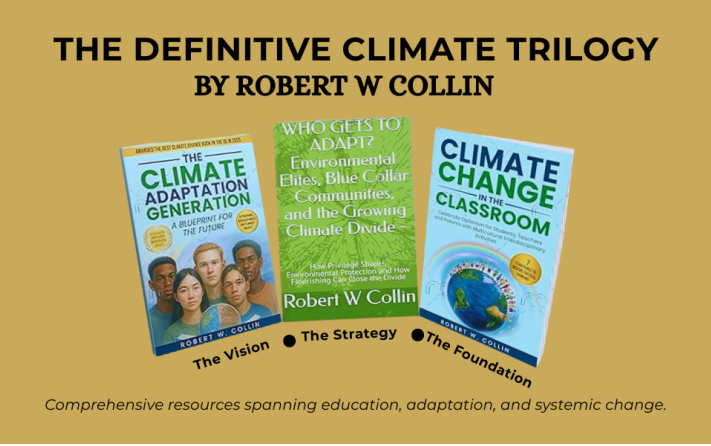
This is the concluding volume of Collin's award-winning Climate Adaptation Trilogy. Released with Labor Day in mind, it deliberately places working people at the center of a discussion that has too often overlooked them.
The Mission Behind the Trilogy
Robert W. Collin is an award-winning author whose work spans climate adaptation, environmental justice, and sustainability. His writing blends science, policy, and community wisdom, and he does so with a purpose. He wants families, schools, and governments to prepare thoughtfully for a warming world.
His catalog reflects a career of range and depth. Beyond the trilogy, he has written Climate Change in the Classroom, Trash Talk, and several other works. Across all of them, one idea recurs. Collin believes communities should aim higher than mere survival. He champions the concept of "flourishing," the belief that adaptation can build stronger, fairer, and more resilient places to live.
That vision shapes the trilogy's tone. Rather than dwelling only on danger, Collin emphasizes community-led resilience, durable infrastructure, and strong public services. He treats adaptation as something people can build together, not something handed down from above.
From Analysis to Action
Collin does not write in abstractions. His materials speak to policymakers, educators, and public leaders who need practical tools. Readers find analysis, case studies, planning frameworks, and actionable strategies throughout his work. The goal is to move people from concern to capability.
This practical focus explains why his audience is so broad. Teachers use his classroom material to prepare students for real environmental questions. Public officials draw on his planning tools to design fairer resilience programs. Community leaders find language and evidence to make the case for the neighborhoods they represent. Collin gives each group something useful to carry forward.
His work also refuses easy comfort. He asks readers to look honestly at who gets protected in climate policy and who gets left behind. That honesty is part of the appeal. It respects the reader enough to tell the truth.
A Rare Standing Among Independent Authors
The response to Collin's work speaks for itself. His books hold a Goodreads average of 4.79 and an Amazon average near 4.7, figures that place him among the highest-rated independent environmental nonfiction authors writing today.
To appreciate that standing, consider the company. Well-regarded titles in the same field include The Sixth Extinction at 4.15, This Changes Everything at 4.16, The Uninhabitable Earth at 3.99, and Braiding Sweetgrass at an unusually strong 4.50. Drawdown, another respected climate title, sits at 4.40. Against these benchmarks, Collin's ratings are remarkable.
For an independent author, the combination is even more unusual. He has gathered more than one hundred Amazon reviews while maintaining a rating around 4.7, alongside that 4.79 Goodreads average. By a reasonable estimate, this places him in roughly the 97th to 99th percentile for rating and meaningful review volume among comparable indie environmental nonfiction authors. Critical recognition supports the numbers. His work has drawn attention from Kirkus Reviews, the Resilience Review, and The Book Revue, and every volume in the trilogy has won awards.
What Sets Robert W. Collin Apart
Many authors write about climate. Fewer write about justice within climate. Collin does both, and he does it without losing the reader in jargon. He connects science and policy to the lived experience of ordinary families, and that connection is what makes his voice distinct.
His work also meets readers wherever they are. The complete trilogy is now available in audiobook form across selected platforms, opening his ideas to commuters, parents, and busy professionals who prefer to listen. Accessibility extends further still. A Spanish edition of the second book, The Climate Adaptation Generation, is arriving soon in both ebook and paperback, broadening his reach to new communities.
This attention to access mirrors the book's central message. Adaptation should not be reserved for the few. Neither should the ideas that guide it. Collin practices what he argues, making his work available in the formats and languages that working people actually use.
Why This Book Matters Now
The timing of Who Gets to Adapt? is deliberate and pointed. Labor Day honors the workers who built America, yet those same workers frequently face the sharpest edge of climate disruption. Collin's book insists that they belong at the center of the conversation, not at its margins.
The result is a work that is both a warning and an invitation. It warns against a future where resilience is purchased rather than shared. It invites readers to imagine and build something better, a form of adaptation rooted in fairness, community, and dignity. For anyone who cares about where climate policy is heading, it is a timely and necessary read.
Read the Book and Join the Conversation
For a clear, human, and honest look at the growing climate divide, this is a fitting place to start. Who Gets to Adapt? is available now on Amazon in print and audiobook, and it stands ready to change how readers think about resilience and fairness. Readers are invited to explore the complete award-winning Climate Adaptation Trilogy, share it with the leaders in their community, and put working people back at the center of the climate story where they belong.
Explore More About Environmental Policy Press
Additional information about Robert W. Collin and his books are available at robertwcollin.com. His professional and published resources are also available through Facebook, LinkedIn, Amazon, and Kirkus Reviews. Business inquiries may be directed to collinrobert4@gmail.com.
The Leader Report Contributor
Grace Patterson
Covers business, leadership, entrepreneurship, and noteworthy professionals across a range of industries.
This article features partner, contributor, or branded content from a third party. Members of the The Leader Report editorial staff were not involved in the creation of this content. All views and opinions are those of the contributor alone.
Orlando Castro Builds Trust Through Clarity
You may also like

Orlando Castro Builds Trust Through Clarity
Mart Ratliff: Leadership Is Not Magic. It Is Design.
Executive Standard Sanitation: From Humble Beginnings To Empowering Others

Slow Founders Get Slow Results. Your Business Moves at the Speed of your Decision-Making.

Beyond the Journey: How Moulay Hicham Aamalki Turns Travel, Healing, and Human Connection into Stories