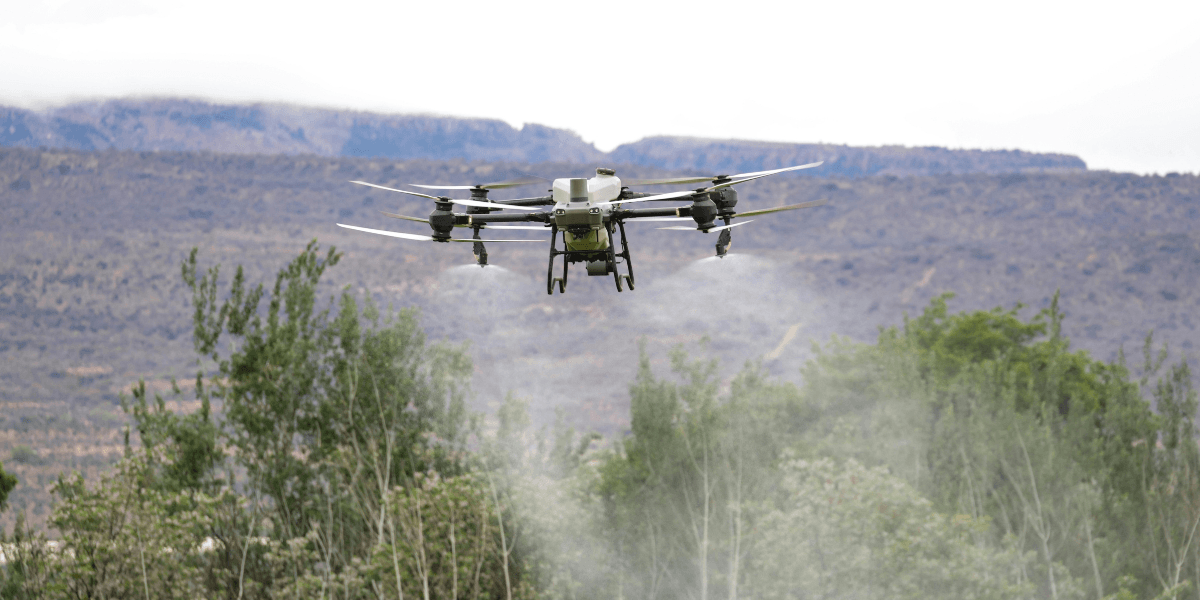
The United States is accelerating its strategic investment in domestic drone innovation through ongoing discussions between federal agencies and emerging aerospace technology firms, signaling a broader shift toward strengthening national capabilities in autonomous systems, advanced manufacturing, and dual-use technologies.
Industry reporting indicates that government stakeholders are evaluating funding mechanisms designed to scale production of small, cost-efficient unmanned aerial systems developed by U.S.-based companies. These discussions involve a combination of traditional procurement models and newer financial tools such as loans, loan guarantees, and potential equity-linked investments aimed at accelerating industrial growth in critical technology sectors.
This approach reflects a growing recognition that unmanned aerial systems have become central to modern infrastructure, logistics, surveillance, disaster response, and defense applications. As demand expands, policymakers are increasingly focused on ensuring that domestic manufacturers can scale rapidly while maintaining supply chain security and technological independence.
Strengthening Domestic Production Capacity
A key objective of the current initiative is to expand domestic manufacturing capacity for next-generation drone systems. While the United States has a growing ecosystem of aerospace startups and robotics firms, industry analysts note that production scale remains a persistent challenge.
Many early-stage companies excel in prototyping and innovation but face significant barriers when transitioning to mass production. These barriers include limited access to capital, fragmented supply chains, and the high cost of specialized components such as sensors, lightweight materials, and advanced flight-control systems.
Federal engagement aims to address these constraints by providing structured financial support that enables companies to build production infrastructure, stabilize supply chains, and accelerate time-to-market for commercially viable systems.
Startup Ecosystem Integration into National Strategy
One notable aspect of this evolving approach is the integration of startup and venture-backed firms into broader national industrial strategy. Historically, government procurement in aerospace and defense has been dominated by large, established contractors. The current model increasingly includes smaller, high-growth companies developing modular drone platforms, autonomous navigation systems, and FPV (first-person-view) technologies.
Firms such as those specializing in reconnaissance drones, lightweight tactical platforms, and component manufacturing are often cited as examples of this emerging ecosystem. These companies are contributing to a more decentralized innovation landscape where agility, software integration, and rapid iteration are key competitive advantages.
This shift also reflects a broader transformation in how governments engage with private-sector innovation. Rather than acting solely as a buyer of finished systems, the government is increasingly positioning itself as a strategic investor in early-stage industrial capacity.
Evolution of Public-Private Investment Models
A central feature of the current framework is the use of hybrid financing models that combine public funding with private-sector execution. These models may include direct investment, subsidized loans, and shared-risk capital structures designed to encourage private companies to scale faster while reducing financial exposure during early growth stages.
This represents a notable departure from traditional procurement cycles, which often span multiple years and prioritize large, fixed-contract acquisitions. Instead, the emerging model emphasizes agility, scalability, and continuous collaboration between government agencies and private innovators.
Analysts suggest that this approach could significantly shorten development timelines for critical technologies, particularly in sectors where rapid iteration and field testing are essential.
Industry Growth and Operational Challenges
The U.S. drone manufacturing sector has experienced substantial growth over the past decade, driven by advances in battery efficiency, artificial intelligence, and miniaturized sensors. However, scaling remains one of the most significant operational hurdles.
Transitioning from prototype production to industrial-scale output requires substantial investment in automated manufacturing systems, quality assurance processes, and supply chain diversification. Additionally, companies must navigate regulatory frameworks governing airspace usage, safety standards, and commercial deployment.
Another challenge is workforce development. As production scales, demand is increasing for skilled engineers, robotics technicians, and aerospace manufacturing specialists. This has prompted greater collaboration between industry and educational institutions to build training pipelines for advanced technical roles.
Economic and Innovation Spillover Effects
Beyond defense and security applications, expanded drone manufacturing capacity is expected to generate broader economic benefits. Drones are increasingly used in industries such as agriculture, where they support precision farming; logistics, where they enable faster delivery systems; and infrastructure inspection, where they reduce operational costs and improve safety.
Emergency response agencies are also adopting drone technology for search and rescue operations, wildfire monitoring, and disaster assessment. These applications highlight the versatility of unmanned systems and their growing role in public service infrastructure.
The expansion of domestic production is therefore expected to have multiplier effects across multiple sectors of the economy, supporting job creation and stimulating innovation in adjacent technologies such as robotics, artificial intelligence, and advanced materials.
Strategic Implications for the Technology Sector
For business leaders and investors, the current trajectory of government involvement in drone innovation highlights several important trends. First, public capital is playing an increasingly active role in shaping the direction of high-growth technology sectors. Second, dual-use technologies—those with both civilian and defense applications—are becoming central to national industrial strategy.
Third, scalability is emerging as a defining factor in determining which companies succeed in transitioning from startup innovation to market leadership. Firms capable of building reliable manufacturing pipelines and meeting large-scale demand are likely to benefit most from this evolving policy environment.
Finally, collaboration between government and private industry is expected to deepen, particularly in areas where technological advancement is closely tied to national competitiveness and economic resilience.
Conclusion
The ongoing expansion of U.S. investment in drone innovation reflects a broader transformation in how industrial policy and technological development intersect. By supporting domestic manufacturers, encouraging startup participation, and leveraging hybrid financing models, policymakers aim to strengthen the country’s position in a rapidly evolving global technology landscape.
As these initiatives continue to develop, the drone sector is emerging as a key example of how coordinated public-private strategies can drive innovation, enhance economic competitiveness, and build long-term industrial capacity.

The Leader Report Contributor
Taylor McKenzie
Covers entrepreneurship, careers, technology, and the changing ways people build businesses and professional identities.
This article features partner, contributor, or branded content from a third party. Members of the The Leader Report editorial staff were not involved in the creation of this content. All views and opinions are those of the contributor alone.