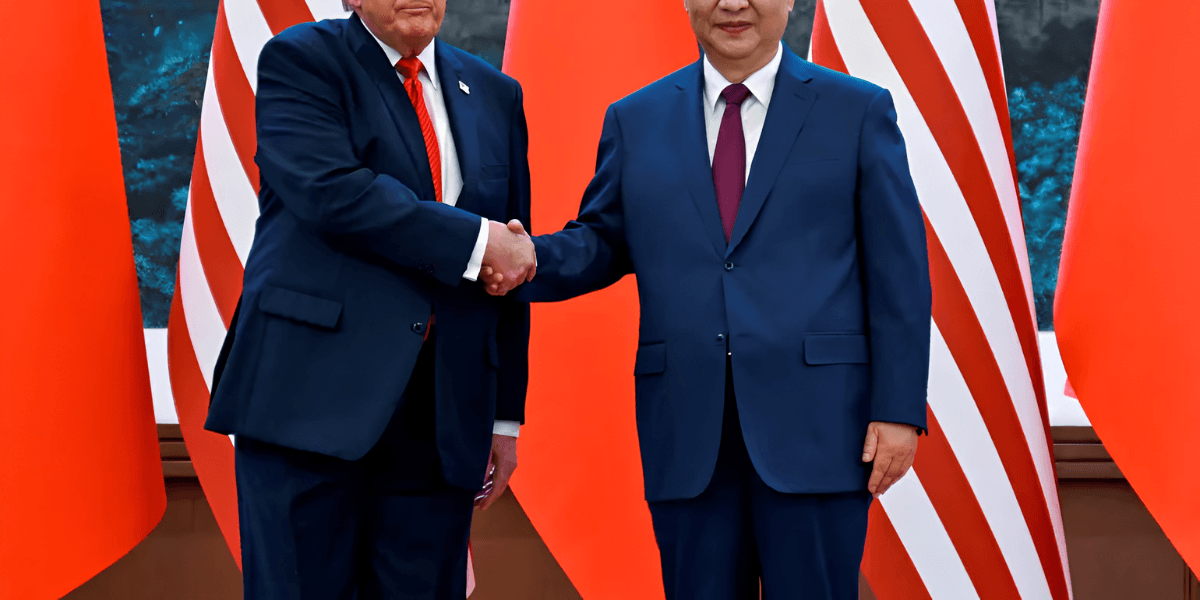
The United States proposed an AI incident notification system with China as governments respond to increasingly advanced artificial intelligence.
Advanced AI Becomes a Bilateral Issue
The United States proposed a bilateral notification mechanism for significant artificial intelligence incidents during economic discussions with China, demonstrating how advanced AI is becoming part of international technology and innovation policy.
Treasury Secretary Scott Bessent and Chinese Vice Premier He Lifeng concluded discussions in New York that included the proposed AI safety mechanism.
The concept would establish a channel through which the two countries could notify one another about significant AI incidents, particularly events with possible national-security implications.
The proposal remains preliminary. No formal bilateral AI incident system has been established as a result of the discussions.
Innovation Creates New Governance Questions
The rapid development of AI has created challenges for governments attempting to establish appropriate safeguards while supporting technological innovation.
Advanced AI systems are being developed and deployed by companies across software, cybersecurity, finance, manufacturing and research.
Their applications can cross borders almost immediately through cloud infrastructure and digital services. That means a significant technology incident can potentially affect organizations in more than one jurisdiction.
A government communication mechanism could provide an additional way to exchange information when incidents have broader implications.
A Framework Still Under Discussion
The U.S. proposal does not currently impose new obligations on AI developers.
The governments have not announced definitions for reportable incidents, reporting thresholds or specific procedures for sharing information. China's response to the proposal has also not resulted in a formal agreement.
Those details would become important if the proposal advances.
A workable international system would need to balance rapid information sharing with cybersecurity, confidentiality and protection of sensitive commercial or government information.
The discussions therefore represent an early step in a broader conversation rather than a completed innovation-governance framework.
AI and International Competition
The proposal also comes as the United States and China compete heavily in advanced technology.
Both countries are developing artificial intelligence systems while seeking advantages in semiconductors, computing infrastructure and other parts of the digital economy.
At the same time, officials are discussing ways to prevent serious technological incidents from escalating across borders.
That combination of competition and communication creates a complicated environment for technology companies.
Businesses must continue developing new systems while also monitoring evolving government policies concerning cybersecurity, advanced computing and AI safety.
Implications for Startups and Technology Companies
For startups developing AI products, changes in international technology policy can affect more than regulatory compliance.
Companies may need to consider cybersecurity architecture, incident-response procedures, data management and international market access as part of product development.
The proposed notification system does not create those requirements, but its discussion illustrates why governance considerations are becoming part of innovation strategy.
Technology companies operating internationally may increasingly need to understand how different governments approach advanced AI.
Innovation and Risk Management
The U.S.-China discussions highlight a broader shift in the technology industry.
Innovation is no longer being evaluated only through the capabilities of a new product or model. Governments and businesses are also examining how advanced technologies behave when they fail, are misused or interact with critical systems.
That makes incident response an increasingly important part of technology strategy.
The proposed bilateral mechanism could eventually become one component of a larger international approach to AI risk, although its final structure remains uncertain.
A Developing Global Technology Framework
The New York discussions show that AI innovation is increasingly connected to international economic policy.
The United States and China still face significant disagreements across trade and technology, and the proposed AI notification system does not resolve those issues.
Its importance lies in the fact that both governments are considering how to communicate about risks associated with increasingly capable AI systems.
For technology leaders, entrepreneurs and innovation teams, the development underscores the expanding scope of AI strategy. Building advanced systems increasingly involves not only technical development but also attention to cybersecurity, international coordination and responsible incident management.

The Leader Report Contributor
Grace Patterson
Covers business, leadership, entrepreneurship, and noteworthy professionals across a range of industries.
This article features partner, contributor, or branded content from a third party. Members of the The Leader Report editorial staff were not involved in the creation of this content. All views and opinions are those of the contributor alone.
You may also like

Who Gets to Adapt? Robert W. Collin's Climate Divide

Orlando Castro Builds Trust Through Clarity

Grandview Capital Lending On Smarter Business Debt
Mart Ratliff: Leadership Is Not Magic. It Is Design.

LockN Is Building A New Kind Of Social Financial Experience Around Goals, Accountability, And Community