The Founder’s Curse explores why entrepreneurs must evolve beyond daily operations and build systems, people, and leadership that allow their businesses to scale.
One of the most uncomfortable truths I’ve come across in entrepreneurship is this: The more valuable you are to your business, the less valuable your business becomes.
Think about that for a minute. If every major decision, customer problem, hiring decision, marketing campaign, payroll question, or important sales conversation eventually ends up on your desk, how scalable is your business really?
The truth is, you may not own a scalable business. You may own a job with unlimited overtime.
And here’s the thing: most entrepreneurs already know this. We know we’re supposed to delegate. We know we’re supposed to create systems. We’ve all heard the expression that we need to work on our businesses instead of in them.
Knowing it isn’t the problem. Actually doing it is.
I’ve been an entrepreneur for more than 30 years, and I can tell you that getting yourself out of the day-to-day operations of a business is much harder than people make it sound. It takes time. It takes patience. And, quite frankly, it takes money.
You have to build systems and document processes. You have to invest in technology and automation. You have to find the right people, train them, and then trust them enough to actually let them do their jobs.
That last part can be especially difficult for entrepreneurs.
Most of us started our businesses by doing practically everything ourselves. In the beginning, that’s often exactly what you have to do. You answer the phone. You handle the customers. You solve the problems. You make the decisions. You know where every dollar is going.
And those behaviors help you survive.
But somewhere along the way, the very things that helped you build the business can become the things preventing you from scaling it.
That’s what makes the Founder’s Curse so interesting to me.
But what happens when you ARE the brand?
This is where I think the conversation becomes even more complicated.
What happens when your name is on the company?
Or your customers want you?
Maybe you’re the designer. The consultant. The personality. The salesperson. The person whose reputation helped build the business in the first place.
How exactly are you supposed to remove yourself from that?
It can feel almost impossible.
But we know it isn’t.
Look at Martha Stewart.
Martha Stewart built one of the most recognizable personal brands in the world. Her name is the brand.
But is Martha Stewart sitting somewhere approving payroll every week?
Is she personally managing every marketing calendar, negotiating every vendor agreement, handling every employee problem, approving every invoice, and overseeing the day-to-day operations of every part of her business?
Of course not. It would be impossible.
Yet Martha Stewart can remain incredibly valuable to the Martha Stewart brand without being responsible for every task required to operate it.
That’s scalability.
And I think this is where entrepreneurs sometimes confuse scalability with growth. They aren’t the same thing.
Increasing your sales is growth. Scalability is building the capacity to handle that growth.
You can increase your revenue dramatically and still have a business that isn’t scalable.
In fact, if every additional dollar in revenue creates more work for the founder, you may actually be creating a bigger problem.
A scalable company has systems. It has automation. It has processes that don’t live exclusively inside the founder’s head.
Most importantly, it has the right people in the right positions who have enough authority to actually make decisions.
And all of that takes resources.
There’s a financial reality to scaling that doesn’t get discussed enough. You often have to spend money before you feel the benefit.
You hire someone before you’re completely comfortable paying the salary. You invest in technology before you’ve seen the return. You spend time training someone to do something you could probably do yourself in half the time.
And then you have to resist taking it back over when they don’t do it exactly the way you would.
That’s hard.
Especially when you’ve spent decades being rewarded for being the person who figures everything out.
Maybe the founder has to scale first
The more I think about scalability, the more I believe we spend too much time talking about scaling companies and not enough time talking about scaling founders.
Because the business can’t really change until the founder does.
At some point, you have to stop measuring your value by how many problems you personally solve.
Your role has to evolve.
Your value becomes your vision. Your strategy. The people you develop. The culture you create. The systems you put into place.
And your ability to build an organization that can make good decisions even when you’re not in the room.
That doesn’t mean the founder becomes irrelevant. Quite the opposite.
It means the founder’s value moves to a different level.
And I don’t think that transition happens overnight. I don’t think there’s a perfect system for it, either.
It’s difficult. It’s uncomfortable. It’s expensive.
And sometimes it means accepting that someone else may do something differently than you would—and that differently doesn’t necessarily mean incorrectly.
Maybe that’s the real Founder’s Curse.
The qualities that made us indispensable in the beginning can eventually become the qualities we have to learn to control if we want the business to grow beyond us.
So perhaps the question isn’t:
How indispensable am I to my business today?
The better question is:
What am I doing today so my business won’t need me tomorrow?
— Marie Adornato
Discover more about Marie Adornato’s work through Spybaby Bridal & Prom's Linktree, follow the boutique on Instagram, TikTok, and Facebook, or connect with Adornato Couture on Facebook, Instagram and TikTok for the latest updates.
Because Marie Said So
Marie Adornato
President/Lead Designer
Spybaby Co. Inc./Adornato Couture
The Leader Report Contributor
Grace Patterson
Covers business, leadership, entrepreneurship, and noteworthy professionals across a range of industries.
This article features partner, contributor, or branded content from a third party. Members of the The Leader Report editorial staff were not involved in the creation of this content. All views and opinions are those of the contributor alone.
You may also like

Who Gets to Adapt? Robert W. Collin's Climate Divide
Orlando Castro Builds Trust Through Clarity
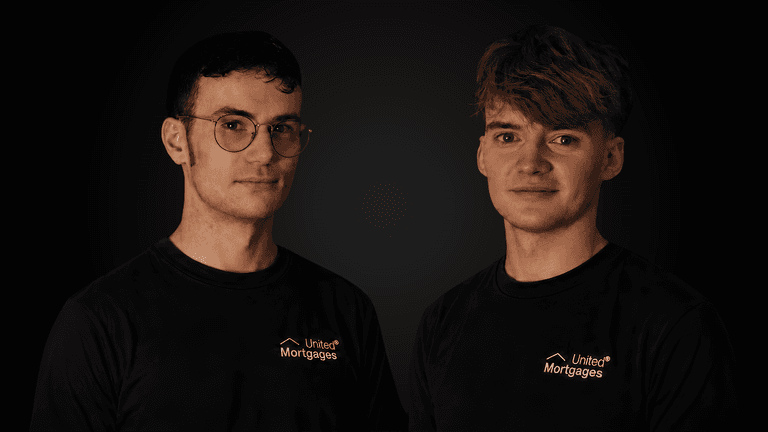
The Mortgage Journey Nobody Owned Until United Mortgages

The Mortgage Journey Nobody Owned Until United Mortgages

How Luna Digital Fuels Growth in Aviation Marketing