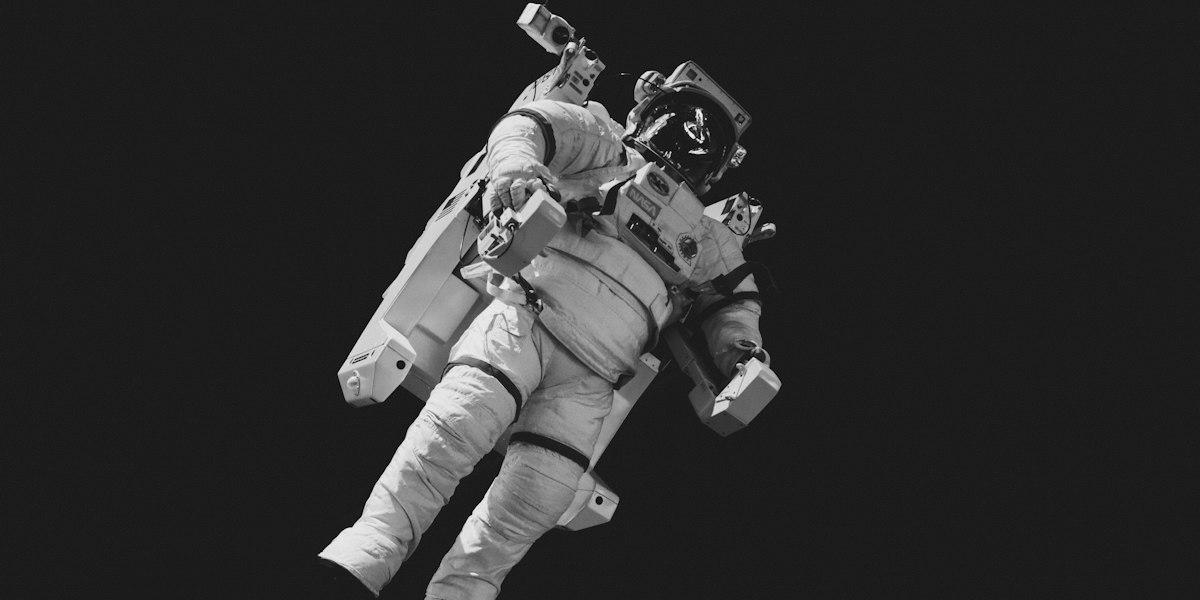
The agency is accepting applications for its next astronaut class through December 3, seeking experienced STEM professionals and pilots.
WASHINGTON. NASA's recruitment campaign for its next astronaut candidate class remained open on November 14, giving qualified American professionals an opportunity to compete for positions supporting the agency's upcoming human spaceflight missions.
The recruitment announcement, initially released on November 7, seeks candidates who could participate in future lunar exploration, operations on the planned Moon Base and preparations for crewed missions to Mars.
The application window closes at 11:59 p.m. Eastern Time on December 3.
The opportunity reflects the changing professional requirements of modern space exploration, where astronauts must combine technical expertise with leadership, communication and the ability to operate in demanding environments.
NASA expects to make its final selections in late 2027.
A New Generation of Astronaut Candidates
NASA's latest recruitment campaign is intended to identify professionals who can support increasingly complex human spaceflight operations.
The next astronaut class is expected to train for activities involving lunar exploration, spacewalking, high-performance aircraft operations and scientific research.
The agency's long-term objectives include returning astronauts to the Moon and establishing a more sustained human presence on the lunar surface.
These activities require people with specialized technical knowledge and the ability to work within complex operational teams.
Astronaut candidates must be prepared to operate in environments where equipment failures, communication delays and unexpected conditions can create significant challenges.
Their responsibilities extend beyond piloting spacecraft.
They may participate in scientific experiments, maintain equipment, conduct field activities and coordinate with engineers and mission specialists on Earth.
Educational Requirements Emphasize STEM Expertise
NASA's basic educational requirements include U.S. citizenship and a master's degree in an eligible science, technology, engineering or mathematics field.
Qualifying disciplines include engineering, biological science, physical science and computer science from an accredited institution.
Applicants may also meet the advanced-degree requirement through certain alternative qualifications.
These include completing at least two years of doctoral study in an appropriate technical field or holding qualifying medical degrees.
Candidates who have completed or are enrolled in a recognized test pilot school program may also qualify under the agency's specified conditions.
The requirements reflect the technical nature of modern human spaceflight.
Astronauts must understand scientific principles, engineering systems and operational procedures while working in environments that differ significantly from ordinary workplaces.
Professional Experience Is Essential
Academic qualifications represent only one part of NASA's selection criteria.
Candidates must also demonstrate at least three years of related professional experience after completing their qualifying degree.
Pilots may meet the experience requirement through specified flight hours.
For high-performance jet aircraft, NASA requires at least 750 hours of pilot-in-command experience.
Applicants with other fixed-wing aircraft experience must meet a higher total flight-hour requirement, including designated pilot-in-command hours.
Rotary-wing pilots must also demonstrate qualifying flight experience.
Medical professionals may use eligible residency training toward the professional experience requirement, subject to the agency's conditions.
These standards reflect the importance of practical experience in addition to formal education.
The astronaut selection process evaluates whether candidates can apply their knowledge in complex operational settings.
Leadership and Teamwork Remain Central
NASA's recruitment announcement specifically identifies leadership, teamwork and communication as essential qualities.
These capabilities are important because space missions involve coordination among astronauts, engineers, scientists, flight controllers and mission management personnel.
Astronauts must communicate clearly while making decisions in situations where immediate assistance may not be available.
They also need to work effectively with colleagues from different technical and professional backgrounds.
Leadership in this environment does not necessarily depend on holding a formal management position.
It involves demonstrating sound judgment, accountability and the ability to support team objectives under demanding circumstances.
Candidates must also pass NASA's long-duration astronaut flight physical.
Physical readiness is an essential part of preparing for the demands of spaceflight and extended missions.
Competition for a Limited Number of Positions
NASA's previous recruitment cycle illustrates the competitive nature of astronaut selection.
The agency received more than 8,000 applications during its 2024 recruitment period.
From those applications, 10 astronaut candidates were selected in 2025.
The selected individuals are completing nearly two years of training.
The agency has selected 370 people to train as astronaut candidates since the 1960s.
Its active astronaut corps currently consists of 32 members.
These figures demonstrate that astronaut positions remain highly selective.
The application process evaluates far more than academic achievement, requiring candidates to demonstrate professional competence, physical readiness and the personal qualities necessary for space exploration.
Training for Future Lunar Missions
Selected candidates will undergo extensive preparation before becoming eligible for spaceflight assignments.
Training includes spacewalking procedures, lunar geology, aircraft operations and other technical activities.
The program is designed to prepare astronauts for missions involving different environments and operational responsibilities.
NASA's Artemis program is central to its plans for renewed human exploration of the Moon.
Future missions are expected to focus on the lunar South Pole, where scientific research and the development of longer-term human operations are major priorities.
The agency also views lunar exploration as an important foundation for future crewed missions to Mars.
The experience gained through operating on the Moon can contribute to research involving life support, habitat systems, resource utilization and long-duration mission planning.
The Professional Value of Space Exploration
NASA's recruitment program also highlights the range of professional disciplines contributing to human spaceflight.
Astronauts come from technical and scientific backgrounds, but successful missions depend on the work of a much larger organization.
Engineers design spacecraft systems, scientists develop experiments, technicians maintain equipment and mission controllers coordinate operations.
The selection process therefore represents one part of a broader professional ecosystem supporting the space industry.
The development of lunar infrastructure and future Mars missions also creates work across aerospace manufacturing, computing, communications and advanced materials.
These activities require highly specialized skills and sustained cooperation between public agencies, research institutions and private-sector partners.
Selection Timeline and Application Deadline
NASA expects to complete the final selection process in late 2027.
Selected candidates will then begin the next stage of astronaut training.
The application deadline remains December 3, 2026, at 11:59 p.m. Eastern Time.
The agency's recruitment process is intended for qualified U.S. citizens who meet the specified educational, professional and physical requirements.
The November recruitment campaign represents another step in preparing NASA's workforce for future exploration.
As the agency develops its lunar and Mars ambitions, the next astronaut class will be expected to combine technical expertise, operational discipline and strong teamwork.
The recruitment process demonstrates how the future of human spaceflight depends not only on spacecraft and engineering systems but also on the people selected to operate them.

The Leader Report Contributor
Claire Bennett
Covers entrepreneurship, career development, and personal growth, with a focus on practical insights and inspiring stories.
This article features partner, contributor, or branded content from a third party. Members of the The Leader Report editorial staff were not involved in the creation of this content. All views and opinions are those of the contributor alone.
You may also like

Tomorrow Proof Financial Protection: Guarding Livelihoods

When the Drug Has No Name, Dr John Smart Mgbakor Says, the Patient Disappears Too

HI Connect+ Rethinks Hospitality Investment Networking

HubSpot Brings Co-Founder Brian Halligan Back as CEO in Major Leadership and Strategy Reset
Jeremy Degre: The Vision Behind Elite A/V’s Success