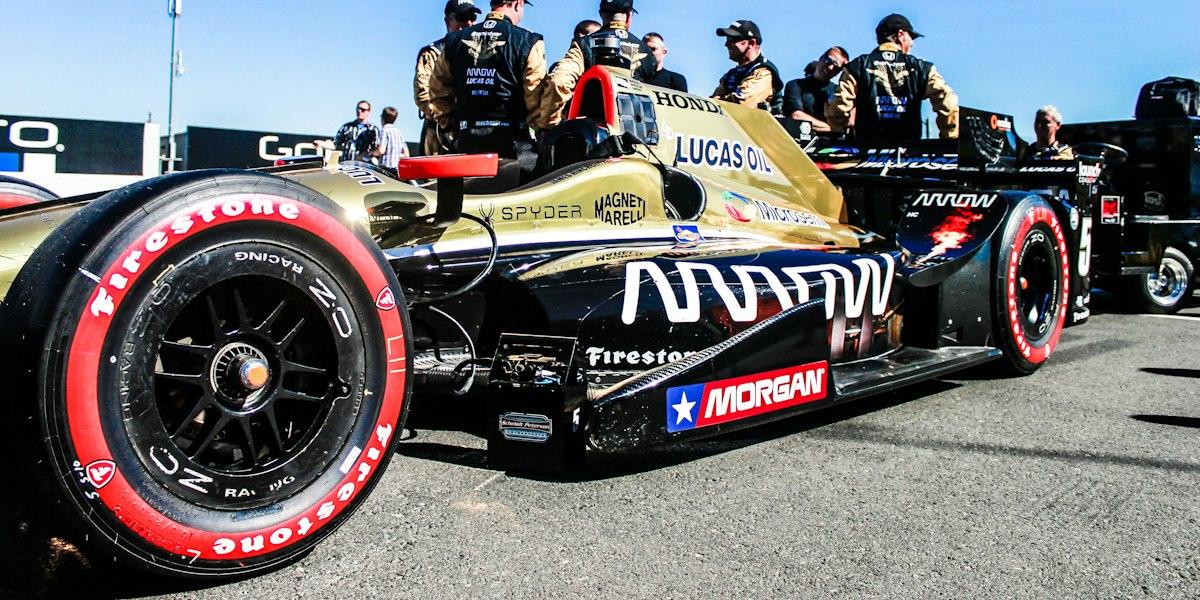
Mercedes confirmed its 2026 constructors' title in Brazil, highlighting the importance of coordinated execution across a demanding racing season.
Mercedes secured the 2026 Formula One Constructors' Championship at the São Paulo Grand Prix, with George Russell and Kimi Antonelli finishing fourth and fifth respectively to provide the points required to confirm the title.
The achievement represented a significant organizational result for the manufacturer, whose success depended on the combined performance of its drivers and the technical and operational teams supporting them throughout the season.
Although Lando Norris won the Brazilian Grand Prix for McLaren, Mercedes emerged from the event with the weekend's most important championship achievement.
The result illustrates how leadership, technical coordination and consistent execution contribute to success in a highly competitive international industry.
Championship Success Requires More Than Individual Performance
Formula One's constructors' championship evaluates the combined results of both cars operated by each team.
Unlike a competition based exclusively on individual driver performance, the constructors' standings reward organizations that consistently deliver points across both entries.
This structure creates a demanding operational environment.
Teams must coordinate driver preparation, vehicle development, engineering decisions, pit operations, logistics and race strategy throughout a global calendar.
Mercedes' fourth- and fifth-place finishes in Brazil demonstrated the value of maintaining competitive performance across both cars.
Neither driver needed to win the Grand Prix for the organization to secure the title. Their combined results were sufficient to confirm the championship.
This reflects an important distinction between individual achievement and organizational performance.
Russell and Antonelli's Contributions
Russell and Antonelli played central roles in Mercedes' championship campaign.
Russell's fourth-place finish and Antonelli's fifth-place result at Interlagos provided the points needed to establish the team's position.
The race itself presented difficult conditions, beginning on intermediate tires before transitioning to slicks and returning to intermediate tires as rain developed during the closing stages.
Both drivers had to manage changing grip levels while protecting their positions.
The ability to complete the race in competitive positions under those circumstances reflected the coordination between the drivers and the engineering teams.
For Mercedes, the result also demonstrated the importance of maintaining two competitive cars rather than relying exclusively on one driver to deliver championship points.
Technical Leadership and Operational Coordination
Modern Formula One teams operate as complex engineering organizations.
Their work extends far beyond preparing a vehicle for a single race.
Engineers analyze performance data, develop technical improvements, evaluate tire behavior and coordinate decisions that influence competitiveness across different circuits.
Technical leaders must also balance immediate race objectives with longer-term development priorities.
A change that improves performance at one circuit may create compromises elsewhere.
Consequently, engineering organizations must evaluate the relationship between vehicle performance, reliability and the demands of the wider championship.
Mercedes' constructors' title represents the cumulative outcome of those activities.
The achievement also reflects the contributions of personnel working outside the public spotlight, including factory engineers, mechanics, analysts and logistics teams.
Consistency as a Competitive Strategy
The constructors' championship places particular importance on consistency.
A team that achieves occasional victories but regularly loses points through mechanical problems or operational mistakes can struggle to maintain its position in the standings.
By contrast, consistently competitive results from both cars can produce a strong championship total.
Mercedes' confirmation of the title in Brazil demonstrated the importance of accumulating points across the season.
The result also highlighted how organizational performance can remain successful even when another team wins an individual race.
McLaren's Norris secured the Grand Prix victory, while Mercedes earned the constructors' championship.
Both outcomes can exist simultaneously because Formula One recognizes separate individual and team competitions.
The Business Dimension of Formula One
Formula One is also a major international business environment.
Teams operate through complex relationships involving manufacturers, sponsors, suppliers, broadcasters, commercial partners and technology organizations.
A championship achievement can strengthen a team's commercial visibility and provide additional value for its partners.
Manufacturers also use motorsports to demonstrate engineering capabilities and develop technical expertise under demanding conditions.
Mercedes' championship therefore carries significance beyond the racing results.
It reinforces the manufacturer's position within a globally recognized competition where technical performance and organizational execution receive international attention.
The commercial value of that achievement depends on several factors, including audience engagement, sponsorship agreements, brand exposure and the broader business strategy of the organization.
Managing Performance Under Pressure
Formula One teams operate in environments where decisions must often be made within seconds.
Drivers communicate with engineers while responding to changing track conditions, competitors and mechanical considerations.
At the same time, management teams must coordinate personnel, maintain operational discipline and make strategic decisions involving limited resources.
The São Paulo Grand Prix provided an example of those pressures.
Rain affected the race's tire requirements and created additional complexity for teams attempting to balance speed with control.
Mercedes' drivers completed the event in positions that secured the championship, demonstrating the importance of executing a season-long strategy under changing conditions.
Leadership Beyond the Race Weekend
The constructors' championship is ultimately the result of work completed over an extended period.
Leadership in such an organization involves aligning technical specialists, drivers and operational personnel around shared objectives.
It also requires effective communication between departments that operate under different responsibilities but contribute to the same competitive outcome.
The ability to maintain performance throughout a long season depends on preparation, decision-making and the capacity to respond to setbacks.
Mercedes' achievement illustrates how these factors combine in a highly technical industry.
The title was not determined by one successful afternoon alone. Its confirmation in Brazil represented the accumulated work of an organization competing across the entire championship calendar.
A Significant Organizational Achievement
Mercedes' 2026 constructors' championship adds another major accomplishment to the manufacturer's Formula One record.
Russell and Antonelli's performances in Brazil confirmed the title, while the team's wider technical and operational structure provided the foundation for its season-long success.
The result also demonstrates why organizational championships are important measures of performance in professional motorsports.
Individual victories attract attention, but sustained success requires the coordination of people, technology and strategy.
For Mercedes, the Brazilian Grand Prix provided the final confirmation of that collective achievement.
The Leader Report Contributor
Grace Patterson
Covers business, leadership, entrepreneurship, and noteworthy professionals across a range of industries.
This article features partner, contributor, or branded content from a third party. Members of the The Leader Report editorial staff were not involved in the creation of this content. All views and opinions are those of the contributor alone.
You may also like
When the Drug Has No Name, Dr John Smart Mgbakor Says, the Patient Disappears Too

HubSpot Brings Co-Founder Brian Halligan Back as CEO in Major Leadership and Strategy Reset
Lynita Mitchell-Blackwell Helps Families Leave Clarity

HP Names Former GSK Chief Emma Walmsley as CEO in Major Leadership Transition

Tomorrow Proof Financial Protection: Guarding Livelihoods