Why recurring team problems are rarely people problems, and how one architect helps leaders redesign the systems producing them.
Somewhere in the middle of a long leadership career, Mart Ratliff noticed a pattern that would not leave him alone. The same problems kept returning under different names. Teams drifted. Initiatives stalled. Talented people worked hard yet never produced the lift they should. He had been told, like most leaders, to communicate more, motivate better, and push harder. None of it lasted. So he asked a different question, one that would eventually become the foundation of Leadership by Design: what if the problem was not the people, but the architecture quietly training them?
The Reframe: Leadership as Design, Not Motivation
Leadership by Design begins with a premise that unsettles a lot of conventional thinking. "Leadership is not magic," Ratliff says. "It is design." Most leadership content focuses on what leaders should say or do. Ratliff focuses instead on what the system is learning from a leader's repeated signals, decisions, tolerances, and consequences.
The distinction matters more than it first appears. Organizations do not simply follow what leaders intend. They adapt to what leadership consistently signals, rewards, tolerates, and reinforces. In Ratliff's language, "signal" does not mean a message or a vibe. It means consequence. "Signal is not intention," he explains. "It is consequence." When those consequences are unclear or misaligned, capable teams drift, stall, or fracture under pressure.
That is why so many culture initiatives fail to hold. They treat symptoms while leaving the underlying structure untouched. "Most leaders are not dealing with a people problem first," Ratliff says. "They are dealing with a system that has learned from them more accurately than they realize." Once a leader sees the hidden architecture, the source of the drift becomes visible. And what is visible can be redesigned.
A Framework Forged, Not Borrowed
Leadership by Design was not assembled from recycled advice or borrowed from a business trend. It was forged across more than three decades of military service, corporate and executive leadership, entrepreneurship, organizational failure, and behavioral study. The framework came from inside the very problems it now addresses.
The breakthrough arrived through an unexpected convergence. Military structure. Executive pressure. Building a business during economic uncertainty. Studying operant conditioning through working with dogs. And observing how natural systems survive through signal, formation, rotation, support, and reinforcement. Nature, in Ratliff's work, is not decoration. It is structural evidence. Bee colonies, bird formations, and penguin huddles reveal how groups organize, distribute pressure, preserve signal, and endure hostile conditions. That biological lens is then translated into practical diagnosis for real organizations.
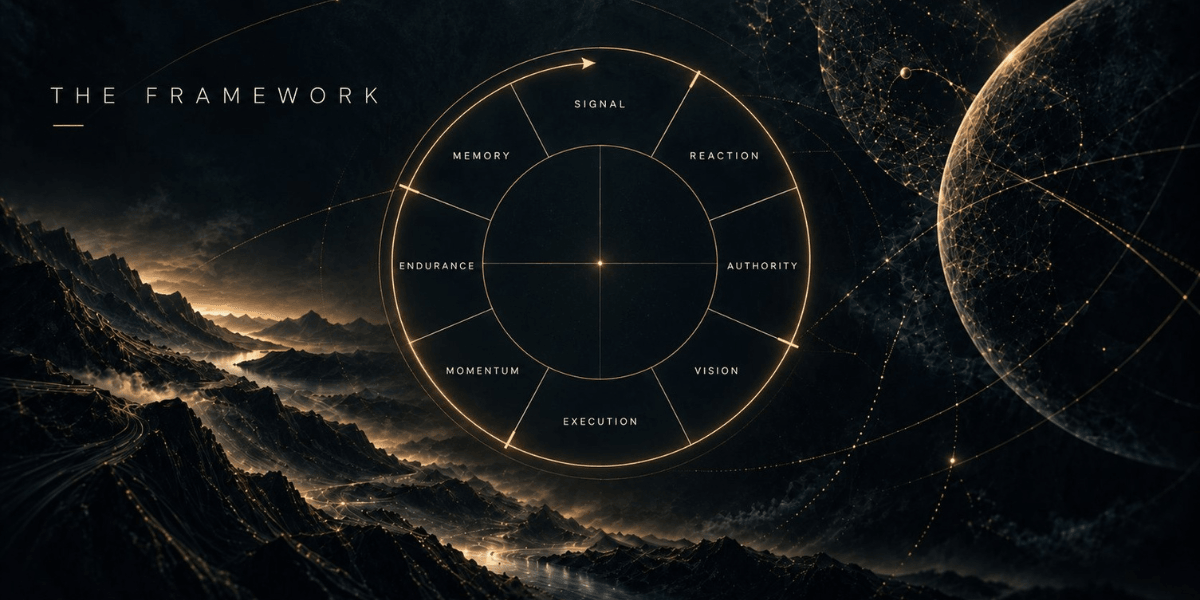
This is what sets the work apart. It does not begin with personality, charisma, or communication tactics. It begins with the architecture that quietly trains organizational behavior. The framework maps eight lifecycle phases: Signal, Reaction, Authority, Vision, Execution, Momentum, Endurance, and Memory. Within that map, it identifies four structural points where leadership tends to fail. The goal is not to inspire harder effort. It is to diagnose the system itself.
The Uncomfortable Clarity Leaders Have Been Waiting For
What makes Ratliff's work compelling is its refusal to offer comfort. He does not deal in quick fixes or motivational flares. "I am not interested in giving leaders another motivational flare that fades before the parking lot," he says. "I want to help them see the architecture producing the drag."

His message lands with leaders who are tired of inspiration that evaporates, initiatives that stall, and teams that work hard without producing results. He challenges them to stop asking only what they intended and start asking what their systems learned. "Your organization is already learning from you," he says. "The question is whether it is learning what you intended."
That reframe gives leaders language for problems they have felt for years but could not name. Grounded in established behavioral science, informed by decades of leadership experience, and tested through organizational diagnostics, the work draws a clear line between effort and design. It argues that many recurring problems are not people problems at all. They are broken architecture. The system is producing exactly what it has been trained to produce, even if that was never the leader's intention.
The Entry Point: The Birds and Bees of Leadership
The doorway into the broader framework is Ratliff's book, The Birds and Bees of Leadership. It introduces the central ideas of signal, reinforcement, and architecture through the biological systems that reveal how groups endure. From there, the platform expands into keynote presentations, seminar experiences, and advisory engagements for founders, executives, managers, and organizations ready to examine the system that produces their results.
For leaders who want to begin with themselves, a Leadership Wiring assessment reveals how they respond under pressure. A Founding Cohort seminar, scheduled for Fort Worth in March 2027, pairs the framework with a personalized signal diagnostic. Consulting work supports organizations seeking a full architectural redesign of their leadership system. Each entry point serves the same purpose: to help leaders see what their organizations have been learning from them, and to redesign that architecture so it holds under pressure.
The work does not promise transformation on demand. Its credibility rests on the framework itself, on the book, and on more than three decades of lived leadership experience. Client engagements are held in confidence, so the strength of the approach shows in its clarity rather than in celebrity endorsements. That is by design too.
See the Architecture You Have Been Building
Every organization is always learning. The signals, consequences, tolerances, and reinforcement patterns a leader emits are teaching the team something, whether the leader means to or not. The question Ratliff keeps returning to is simple and pointed: is your organization learning what you intended?
If you are a founder, executive, or manager who is tired of solving the same problem twice, Leadership by Design offers a different starting point. Begin with the Leadership Wiring assessment to see how you respond under pressure. Read The Birds and Bees of Leadership to understand the architecture beneath your results. Reserve a place in the Founding Cohort seminar in Fort Worth, available at the founding rate of $1,500 through December 31, 2026. Or book a keynote or discovery call to explore what your system has been quietly teaching. Once you see the hidden architecture, you will never see your organization the same way again.
Explore More About Leadership by Design
Connect with Mart Ratliff, take the Leadership Wiring Assessment, read The Birds and Bees of Leadership, explore Keynotes, and enroll in Seminars.

The Leader Report Contributor
Grace Patterson
Covers business, leadership, entrepreneurship, and noteworthy professionals across a range of industries.
This article features partner, contributor, or branded content from a third party. Members of the The Leader Report editorial staff were not involved in the creation of this content. All views and opinions are those of the contributor alone.
You may also like

Executive Standard Sanitation: From Humble Beginnings To Empowering Others

Slow Founders Get Slow Results. Your Business Moves at the Speed of your Decision-Making.

Beyond the Journey: How Moulay Hicham Aamalki Turns Travel, Healing, and Human Connection into Stories

Janet Walker Turned Creative Independence Into A Career Strategy

Grandview Capital Lending On Smarter Business Debt