
Chef turns kitchen discipline into trading logic, building a system for chefs to master money and structure.
Most people imagine a chef’s life as fire, speed, pressure, and precision on a line that never slows down. What they rarely see is the invisible structure underneath it all, the sequencing, the forecasting, the inventory logic, and the discipline that keeps a kitchen from collapsing during peak service.
Now imagine taking that same system and applying it to financial markets.
That is the unusual bridge built by Yusuf Yaran, the No.1 international bestselling author of Rich Chef Poor Chef®, a Cornell-trained hospitality leader and Culinary Olympian with more than 30 years across elite kitchens in over 15 countries. Since 2019, he has also been an active trader in US commodities and financial markets, an extension of the same discipline, not a separate identity.
But the real story isn’t that a chef trades markets.
It’s why the system works at all.
The Hidden Operating System of a Kitchen
Ask most chefs what they learned in kitchens and they’ll talk about speed, creativity, and resilience. Ask someone like Yusuf Yaran, and the answer shifts.
He doesn’t describe kitchens as artistic chaos. He describes them as controlled systems under pressure.
Every service is built on invisible rules:
- Mise en place is pre-positioning resources before execution
- Timing is asset management under stress
- Portioning is risk control disguised as repetition
- Failure management is damage control in real time
In other words, a kitchen is not just a workplace, it is a live simulation of decision-making under volatility.
This is where the transition begins.
Because markets behave the same way.
When Cooking Logic Meets Market Logic
Yaran often explains his trading philosophy in culinary terms, not because it is poetic, but because it is structurally accurate.
“I trade markets the way I plated desserts,” he says.
“Mise en place, forecast the ingredients, control the timing. Position sizing is portion control. Risk management is fire control. It’s the same brain, applied to capital instead of cream.”
In most professions, metaphors are decorative. In his case, they are functional.
Markets, like kitchens, punish disorder instantly. They reward preparation quietly. And they expose emotional decisions without hesitation.
This is why his approach stands apart from typical financial narratives written for chefs. He is not translating theory, he is translating muscle memory.
Why Most Career Advice for Chefs Breaks Down
The hospitality industry is often celebrated for passion, but rarely structured for wealth. Most chefs progress through predictable stages:
- Learn the craft
- Build reputation
- Increase income
- Stop there
Step four is where the system fails.
According to Yaran’s framework in Rich Chef Poor Chef®, most professionals never build what he calls the “third layer”, the financial architecture that converts income into long-term stability.
They improve earnings, but not structure. They upgrade lifestyle, but not allocation thinking. They optimize effort, but not systems.
The result is a paradox: highly skilled professionals with weak financial compounding.
From Apprenticeship Kitchens to Structured Markets
Yaran’s entry into financial markets was not improvised. It followed the same logic that shaped his culinary career: structured apprenticeship.
In 2019, at 43, he enrolled in Buffett Online School Singapore (BOSS), a program built on Buffett-method investing principles developed by Mary Buffett.
He later expanded his technical understanding under Sandy Jadeja, whose work focuses on market structure, timing, and disciplined execution.
Alongside financial training, he studied performance and mindset systems through programs such as Tony Robbins’ UPW, Robert Kiyosaki’s financial education frameworks, and seminars by Grant Cardone and Gary Vaynerchuk.
But what matters is not the list.
It is the pattern.
Every influence reinforced one principle: discipline only works when it is structured.
The Real Product: A System, Not a Story
Rich Chef Poor Chef® is often misread as a motivational book. It is not.
It is structured in three operational stages:
- Acknowledge: understand the reality of hospitality careers
- Activate: improve performance, visibility, and income
- Achieve: build financial systems that sustain wealth
Most books stop at activation. That is where inspiration lives.
Yaran’s framework pushes further, into allocation, asset thinking, financial literacy, and what he calls the “Rich Chef’s Financial Weapon”: the ability to convert unstable income into structured capital behavior.
The difference is not theoretical. It is mathematical in outcome.
Two chefs earn the same raise:
- One increases lifestyle spending
- The other reallocates into long-term structure
One improves comfort. The other builds independence.
Why Discipline Alone Is Not Enough
One of the book’s most uncomfortable insights is that discipline, by itself, does not guarantee progress.
A chef can be disciplined in the kitchen and still be financially unstructured. A trader can be disciplined in execution and still lose capital without risk systems.
Discipline without structure burns out.
This is the gap Yaran focuses on. Not motivation. Not talent. Not effort.
But system design.
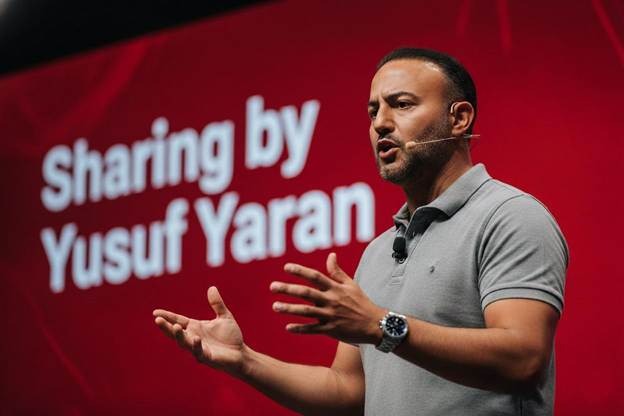
The Operator Behind the Framework
Before financial markets, Yaran’s credibility was built in kitchens at the highest level of global hospitality.
His career includes:
- National pastry champion (Turkiye’s first) at the age of 22.
- Member of National Team Türkiye Culinary Olympics participant (2008) (Turkiye’s first)
- Creator of the Sultan’s Golden Cake (a US$1,000 dessert ranked No.4 on Forbes’ most expensive desserts list)
- Guinness World Record holder for the longest Christmas Yule Log cake (1,068 meters, Shanghai, 2011)
- Senior leadership roles across luxury hospitality groups in Asia.
He also trained under legendary chefs including Pierre Hermé and Paul Pairet, whose approach to precision, creativity, and structure shaped his culinary foundation.
This matters because it explains the transfer logic behind his financial thinking.
High-performance kitchens are not chaotic, they are engineered systems under stress.
Markets are the same.
The Industry Problem Nobody Talks About
Hospitality is one of the largest global employment sectors, yet one of the least financially structured.
It produces extraordinary skill but inconsistent financial outcomes.
Yaran’s argument is not that chefs need more income.
It is that income alone is not a solution.
Without structure, higher income simply accelerates the same cycle.
More work. More pressure. Same outcome.
A Different Way to Read Rich Chef Poor Chef®
The book is not asking chefs to become traders.
It is asking something more precise:
What happens if the systems that make you excellent in a kitchen are finally applied to your financial life?
Because once discipline is structured, it stops being reactive.
It becomes compounding.
And compounding, whether in kitchens or capital, is what separates performance from permanence.
What the Framework Actually Delivers
There is a reason Yaran does not separate his identities as chef and trader. To him, they are not two careers running in parallel. They are the same operating logic applied to two different environments. The kitchen taught him that performance under pressure is not about raw talent. It is about what you have prepared before the pressure arrives. Financial markets confirmed the same thing.
That is the central argument of Rich Chef Poor Chef®. Not that chefs should become investors. But that the discipline they already have, the real, tested, under-fire discipline of professional kitchens, is exactly what most financial frameworks are built on. They just never told chefs that.
Award Winning Recognition for Hospitality Career Growth
Rich Chef Poor Chef® has received two major awards in 2026, both recognising its contribution to career development and financial literacy for hospitality professionals.
Evergreen Awards named it Best Self-Help and Career Development Book in the United States of 2026. The recognition highlights the book’s structured approach to career development, financial awareness, and long-term professional growth within the global hospitality industry, distinguishing it from generalized motivational content through its focus on practical, experience-based guidance.
Best of Best Review awarded it Best Business Book of Hospitality and Career Category in the United States of 2026. This award praised Yusuf Yaran’s ability to combine elite culinary experience with practical wealth-building strategies, highlighting the book’s impact on financial literacy, leadership, and career sustainability in hospitality.

Yusuf Yaran
Yusuf Yaran is the No.1 international bestselling author of Rich Chef Poor Chef®, the first and only book written for chefs and hoteliers about wealth creation and career transformation. A Cornell-trained hospitality leader, Culinary Olympian, Guinness World Record holder, and active financial markets trader, he has worked across more than 15+ countries over 30+ years.
He has trained under Paul Pairet, Michelin-starred chef and foreword author of Rich Chef Poor Chef®, and Pierre Hermé.
He holds a Master’s from Cornell University, an MBA from UNIR, executive training from Harvard Business School, and is completing doctoral research at the Business School of the Netherlands.
Learn more at richchefpoorchef.com and yusufyaran.com.
Brand & References