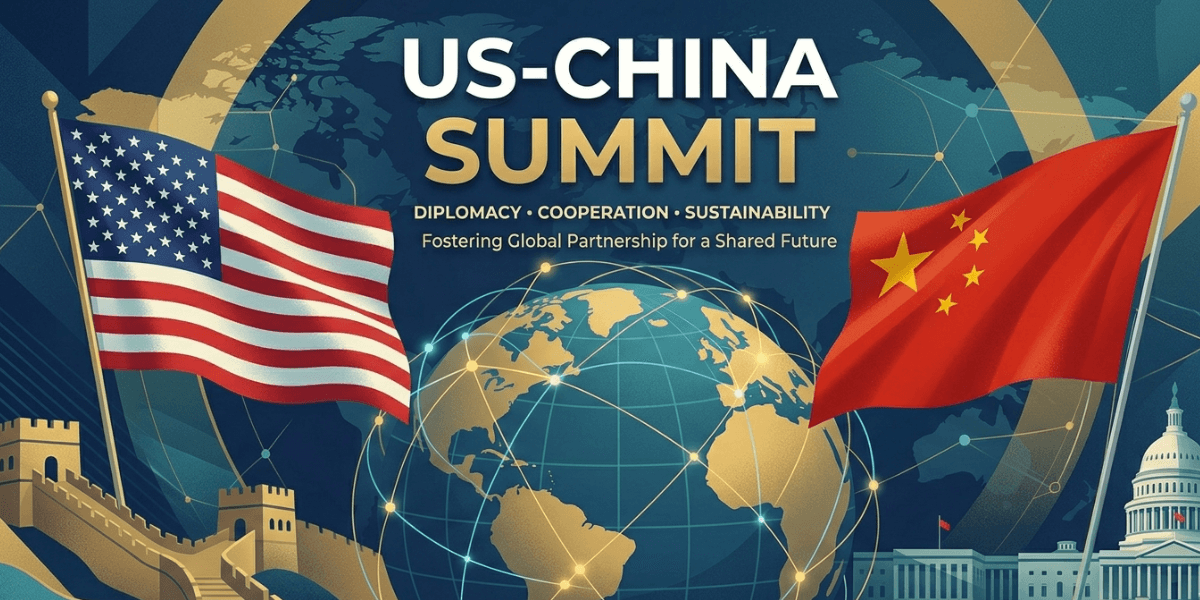
A high-level diplomatic summit between the United States and China has drawn significant international attention as both governments attempt to stabilize one of the world’s most economically interconnected and strategically complex relationships. The discussions focus on trade policy, technology governance, energy security, supply chain resilience, and long-term geopolitical risk management in an increasingly fragmented global economy where cooperation and competition exist simultaneously across multiple sectors.
Senior officials from both countries have emphasized maintaining structured communication channels despite ongoing strategic competition and economic friction. While disagreements over tariffs, export controls, industrial policy, and technology restrictions continue to shape bilateral relations, both sides have reiterated the importance of preventing escalation that could disrupt international markets and global supply chains. Diplomatic engagement is increasingly viewed as a practical mechanism for managing differences, ensuring stability, and reducing uncertainty for global stakeholders and multinational businesses.
The economic agenda of the summit centers on trade flows, industrial competitiveness, supply chain resilience, and the regulation of emerging technologies. Both countries continue to navigate complex restrictions involving advanced semiconductors, artificial intelligence systems, and critical manufacturing inputs that underpin global production networks. Business leaders across multiple industries are closely monitoring the discussions for signals of incremental policy adjustments, improved coordination mechanisms, or frameworks that could reduce uncertainty in cross-border investment and trade operations.
Geopolitical considerations remain central to the discussions, particularly regarding regional security dynamics and long-standing strategic disagreements. Topics such as stability in the Indo-Pacific, maritime security, and broader global governance frameworks continue to require careful diplomatic management and sustained engagement. Despite these challenges, both sides have indicated that structured dialogue remains preferable to increased confrontation or unilateral escalation in addressing sensitive international issues.
Energy security and global supply chain stability have emerged as key priorities within the summit discussions, reflecting ongoing volatility in international markets. Disruptions in energy transport routes and shifting production patterns have underscored the importance of coordination on resource management, logistics infrastructure, and transportation resilience. Financial markets remain highly sensitive to diplomatic signals, as investors evaluate potential impacts on commodity prices, trade flows, currency stability, and long-term economic growth prospects.
For business leaders, investors, and policymakers, the summit underscores the importance of navigating uncertainty in a fragmented global economy where geopolitical risk increasingly intersects with economic strategy and corporate planning. Companies operating international supply chains must continuously adapt to regulatory changes, trade restrictions, and shifting diplomatic conditions across multiple jurisdictions. Even without immediate breakthroughs, sustained dialogue between major economies can help reduce volatility and provide a more predictable environment for long-term planning, capital allocation, and investment decisions.
While the outcomes of the summit remain uncertain, the continuation of high-level engagement reflects the importance of sustained communication in managing complex international relationships. The direction of future discussions is expected to influence global business confidence, shape expectations for trade flows, and impact investment conditions across multiple industries and regions over the coming months.
This high-level engagement also highlights the broader shift in global economic governance, where major economies are increasingly relying on direct diplomatic channels to manage systemic risks. As supply chains become more geographically diversified, governments are balancing domestic industrial priorities with the need to maintain access to international markets. This balancing act is particularly evident in sectors such as advanced manufacturing, digital infrastructure, and energy transition technologies, where policy decisions in one country can have immediate ripple effects across global production networks.
At the same time, multinational corporations are adapting their long-term strategies to account for a more uncertain geopolitical environment. Many firms are reassessing sourcing strategies, investment exposure, and regulatory risk frameworks to ensure operational continuity under varying policy scenarios. While uncertainty remains a defining feature of the current global landscape, structured diplomatic engagement between major economies is viewed by many analysts as a stabilizing factor that helps prevent abrupt disruptions in trade and financial systems.
Overall, the summit reflects ongoing efforts to manage complexity through dialogue, signaling the importance of sustained engagement in maintaining global economic stability.

The Leader Report Contributor
Grace Patterson
Covers business, leadership, entrepreneurship, and noteworthy professionals across a range of industries.
This article features partner, contributor, or branded content from a third party. Members of the The Leader Report editorial staff were not involved in the creation of this content. All views and opinions are those of the contributor alone.
You may also like

Who Gets to Adapt? Robert W. Collin's Climate Divide

Orlando Castro Builds Trust Through Clarity
Mart Ratliff: Leadership Is Not Magic. It Is Design.

The Mortgage Journey Nobody Owned Until United Mortgages

The Mortgage Journey Nobody Owned Until United Mortgages