Across the United States, a growing number of employers are rethinking how employees build long-term careers within organizations. Instead of relying on traditional promotion ladders or external hiring for every new role, companies are increasingly adopting internal mobility programs that allow workers to shift across departments, develop new skills, and take on different responsibilities without leaving their employer.
This shift reflects a broader transformation in the modern workplace, where rapid changes in technology, business models, and customer expectations are forcing organizations to become more adaptable. As a result, career development is becoming less linear and more dynamic, with employees encouraged to build “portfolio careers” within a single company.
Moving away from traditional career ladders
For decades, career progression in most organizations followed a predictable structure: employees entered at junior levels, gained experience, and moved upward through clearly defined promotions. While that model still exists in some industries, it is becoming less dominant as companies face faster-changing skill requirements and more fluid job roles.
Internal mobility programs are designed to replace this rigid structure with a more flexible system. Instead of waiting for a promotion in their current department, employees can explore open roles in other teams, apply for short-term internal projects, or transition into entirely different functions.
In practice, this means a marketing associate might move into a data analytics role, or an operations employee might shift into product support after completing internal training. These transitions are increasingly supported by structured learning pathways that help employees build the skills needed for new responsibilities.
Internal talent marketplaces reshape workforce planning
A key feature of this trend is the rise of internal “talent marketplaces.” These are digital systems used by companies to match employees with opportunities across the organization. Rather than relying on managers alone to identify talent, these platforms analyze employee skills, experience, and performance data to recommend internal roles or projects.
This approach allows organizations to better utilize existing talent while reducing the need for external recruitment. It also helps employees discover opportunities they might not have otherwise considered, particularly in large companies where visibility across departments can be limited.
For employers, internal talent marketplaces offer a way to respond more quickly to changing business needs. Instead of hiring externally for every new requirement, companies can redeploy existing staff who already understand the organization’s culture and processes.
Reskilling becomes a core part of retention strategy
One of the most important drivers behind internal mobility programs is the growing emphasis on reskilling. As job roles evolve due to automation, digital transformation, and shifting customer expectations, companies are increasingly investing in training programs that help employees transition into new roles.
These programs often include structured learning modules, mentorship opportunities, and hands-on project experience. Employees may be encouraged to complete certifications or participate in cross-functional assignments that expose them to different areas of the business.
For employers, reskilling serves two major purposes. First, it helps close internal skill gaps without relying heavily on external hiring, which can be expensive and time-consuming. Second, it improves employee retention by giving workers a clear pathway to grow within the organization.
Employees who feel they have opportunities to learn and advance are more likely to stay with their employer, reducing turnover costs and preserving institutional knowledge.
Mid-career professionals gain new flexibility
While internal mobility benefits employees at all stages of their careers, mid-career professionals are particularly well-positioned to take advantage of these programs. Workers with several years of experience often have transferable skills that can be applied in multiple departments, even if they have not worked in those areas before.
Internal mobility programs allow these employees to pivot into new roles without starting over in entry-level positions. For example, someone with experience in customer service might transition into user experience research, or an administrative professional might move into project coordination or business operations.
This flexibility is especially valuable in industries undergoing rapid change, where traditional job roles are being redefined or phased out. Instead of facing job displacement, employees can adapt by moving into emerging roles within the same organization.
Managers take on a new role as talent developers
The shift toward internal mobility is also changing expectations for leadership and management. Managers are no longer evaluated solely on their ability to retain employees within their own teams. Increasingly, they are also expected to support employee growth across the broader organization.
This requires a cultural shift in how success is measured. In some companies, managers are now assessed based on how effectively they develop talent, including how many employees transition into new roles internally. Rather than discouraging movement, leaders are encouraged to actively support it.
This approach can be challenging in practice, as it requires managers to balance team performance with long-term organizational development. However, companies adopting this model argue that it ultimately strengthens the overall workforce by ensuring that talent is deployed where it is most needed.
Broader implications for the future of work
The expansion of internal mobility programs reflects a larger shift in how careers are structured in the modern economy. Instead of stable, long-term roles with clearly defined progression paths, workers are increasingly moving through a series of evolving roles that require continuous learning and adaptation.
For employees, this means career success is less about following a single trajectory and more about building a diverse set of skills over time. For employers, it means workforce planning must become more flexible, responsive, and skills-focused.
At the organizational level, internal mobility also represents a shift toward more sustainable talent strategies. By developing employees internally rather than relying heavily on external hiring, companies can reduce costs, improve retention, and respond more effectively to changing market conditions.
Key takeaways
Several important trends are emerging from the rise of internal mobility programs:
- Career progression is becoming less linear and more flexible within organizations
- Internal talent marketplaces are helping match employees with new roles and projects
- Reskilling is becoming a central strategy for employee retention and workforce planning
- Mid-career workers are gaining new opportunities to pivot into different roles without leaving employers
- Managers are increasingly responsible for developing talent across the organization, not just within teams
As these programs continue to expand, they are reshaping the traditional concept of a career. Instead of a fixed ladder, the modern workplace is evolving into a network of interconnected opportunities, where growth is defined by adaptability, learning, and movement across roles.
The Leader Report Contributor
Claire Bennett
Covers entrepreneurship, career development, and personal growth, with a focus on practical insights and inspiring stories.
This article features partner, contributor, or branded content from a third party. Members of the The Leader Report editorial staff were not involved in the creation of this content. All views and opinions are those of the contributor alone.
You may also like

Philipp Ruebenhaus Helps Professionals Find Clarity in Career and Business
18th Street Trading Sets a Higher Standard
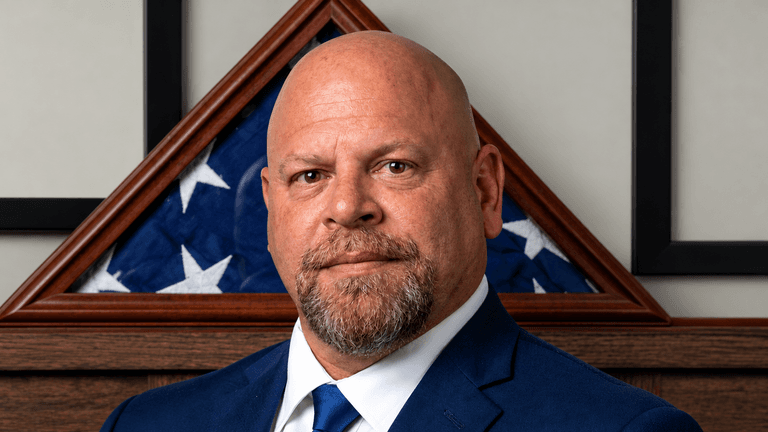
The Power of Choice: Troy P. Zehnder on Becoming, Connecting, and Influencing

SimplyGrow: Helping SMEs Turn AI Into Real Customer Connections

Candice Noguera: Redefining Success Through Finance and Service