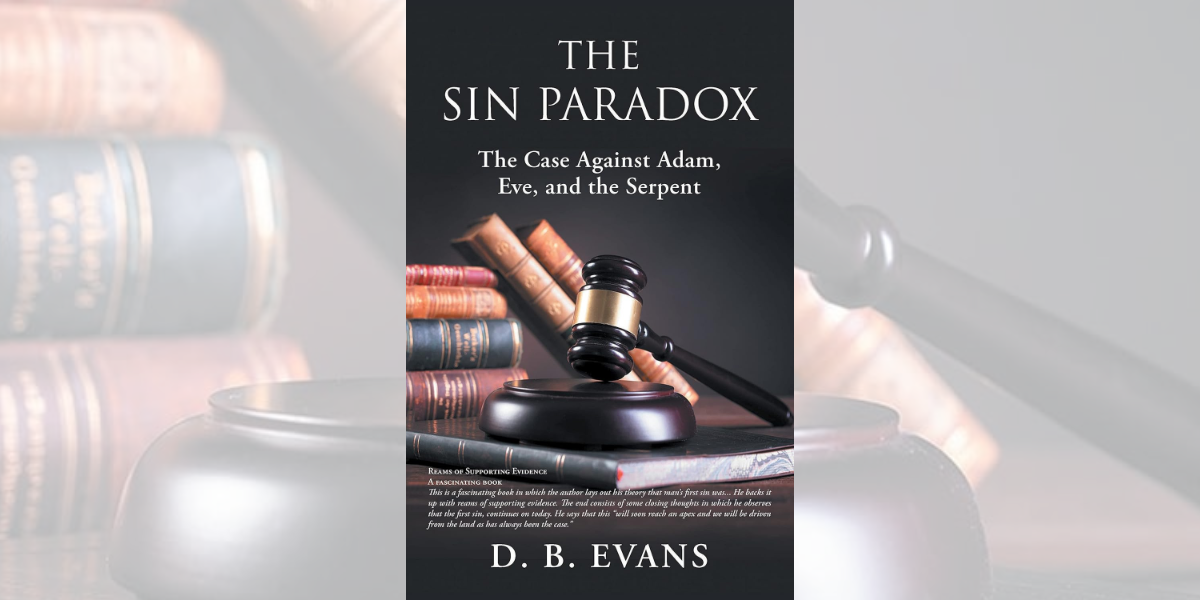
The Sin Paradox: D.B. Evans’ Revolutionary Rethink on Original Sin and Modern Morality
For centuries, theologians have grappled with the question of Original Sin, what it means, how it shapes humanity, and how it influences our moral compass. From Augustine to modern-day scholars, the doctrine of Original Sin has been a cornerstone of Christian belief, framing the narrative of human fallibility and the need for redemption. Yet, in The Sin Paradox, theologian D.B. Evans dares to challenge this traditional view, offering a bold reimagining that resonates deeply with today’s moral struggles.
Evans’ innovative work moves beyond the historical context of the biblical story of Adam and Eve in the Garden of Eden. He transforms the ancient concept of Original Sin into an ongoing, dynamic force that continues to shape the moral and ethical dilemmas humanity faces today. With his new interpretation, The Sin Paradox doesn’t just examine sin as a fixed problem to be solved, it offers a fresh perspective on how sin impacts our lives in real-time, linking the biblical fall to modern moral crises like inequality, abortion, and the breakdown of social values.
But this is more than a theological exercise. Evans’ approach to theology is deeply personal, practical, and visionary. He invites readers to think critically about how our understanding of sin and morality can evolve in the 21st century, offering a roadmap for spiritual growth and reflection that bridges the gap between ancient scripture and modern realities.
The Catalyst for Change: A Single Word from Genesis
D.B. Evans didn’t set out to revolutionize theology. Like many scholars, his early years were steeped in traditional teachings about Original Sin, and he, too, adhered to the established doctrine. But as Evans immersed himself in the Genesis story, something shifted. While reflecting on the pivotal moment when Adam and Eve disobeyed God in the Garden of Eden, Evans noticed a seemingly innocuous word that changed everything. It wasn’t the word “sin” itself or “fall”, but the way it was woven into the larger fabric of humanity’s moral narrative.
It was in this quiet moment of contemplation that Evans realized that Original Sin wasn’t a one-time, irreversible act that occurred in the distant past. Instead, it was a force that still reverberates through the choices and moral struggles we face today. This epiphany formed the foundation of The Sin Paradox, where Evans posits that sin is not simply a historical event resolved once and for all through Christ’s sacrifice; rather, it is an ongoing moral dilemma, the consequences of which continue to shape our world and ourselves.
A New Interpretation of Original Sin
In The Sin Paradox, Evans proposes a revolutionary thesis that Original Sin is not an isolated incident but the beginning of a continuous moral struggle. Through a combination of deep theological analysis and narrative storytelling, Evans reframes the fall of Adam and Eve as the origin of a cyclical, ongoing issue within humanity, one that isn’t just about disobedience in the Garden but about the repeated moral lapses that plague human society across generations.
According to Evans, when Adam and Eve chose to eat from the Tree of Knowledge, they didn’t merely create a historical moment; they laid the groundwork for an ever-evolving cycle of moral decisions that would echo through humanity’s history. The ripple effects of that original disobedience continue to influence the moral landscape we navigate today. Every choice, every ethical struggle, every societal issue, from the injustice of inequality to the contentious debates surrounding abortion, can trace its roots back to that first act of defiance.
Evans explains, “Original Sin isn’t just a problem that was solved with the cross; it’s the reason why humanity is still wrestling with moral decay, injustice, and ethical dilemmas today. It’s an ongoing struggle.” His perspective invites readers to rethink their assumptions about sin and its role in modern life, urging us to view sin not as a past issue but as an ever-present force that shapes both individual and collective morality.
The Courage to Break from Tradition
One of the most striking aspects of The Sin Paradox is Evans’ willingness to challenge centuries of theological orthodoxy. For much of Christian history, the doctrine of Original Sin has been understood as a singular event in the past that was resolved through Christ’s sacrifice. Traditional theology teaches that humanity’s moral debt was paid once and for all. But Evans offers a stark contrast. He argues that Original Sin is not something that was “finished” or “fixed” in the past but is a continuous moral challenge that we, as individuals and as a society, still grapple with today.
This is not a small departure. For many theologians and believers, questioning the resolution of Original Sin challenges the foundations of Christian faith. Evans, however, is not seeking simple answers or comfort in old assumptions. He aims to engage readers in a deeper conversation about the moral and spiritual dilemmas we face and how our understanding of sin can evolve to meet the complexities of modern life.
Evans acknowledges this may unsettle some. “By questioning the traditional understanding of Original Sin,” he writes, “we confront tough questions head-on.” Evans urges both theologians and lay readers to reconsider sin’s ongoing impact.
Connecting the Past to the Present
What makes The Sin Paradox so compelling is its ability to bridge the gap between ancient Scripture and contemporary moral issues. Evans doesn’t just reimagine Original Sin as an abstract theological concept, he connects it to the ethical struggles and societal problems that define the modern world. From the injustice of racial inequality to the moral complexities surrounding abortion, Evans shows how the consequences of the fall continue to shape our ethical decisions today.
This perspective provides a fresh way to look at contemporary issues. For example, instead of viewing modern debates on morality as isolated or unrelated to Christian doctrine, Evans challenges us to see them as part of the ongoing moral struggle initiated by Original Sin. Through this lens, abortion isn’t just a political or social issue, it is deeply connected to the broader moral dilemmas rooted in humanity’s original disobedience. The same can be said for issues like poverty, war, and environmental degradation, which, according to Evans, are manifestations of the moral decay that began in Eden and continues to afflict the world.
Evans’ Call for Action: A Dynamic Faith
Ultimately, The Sin Paradox is not just a theological exercise; it’s a call to action. Evans challenges readers to rethink how they live out their faith and how they engage with the moral issues of today. He calls for a more dynamic, open-minded approach to Scripture, one that doesn’t shy away from difficult questions or dismiss the complexities of modern life. Through his reinterpretation of Original Sin, Evans calls believers to actively engage with the moral struggles of our time and to address them through a renewed understanding of sin, grace, and redemption.
By framing Original Sin as an ongoing moral challenge, Evans inspires readers to take personal responsibility for the ethical decisions they make and to contribute to a society that confronts its moral failings with honesty and courage. “It’s time to stop treating sin as a fixed, historical problem and recognize it as a living, breathing force in our lives,” Evans writes. “By doing so, we can find new ways to address the moral issues that shape our world.”
The Impact of The Sin Paradox on Modern Theology
The Sin Paradox has the potential to reshape modern theology. Evans’ innovative interpretation opens the door for a new kind of theological thinking, one that engages with contemporary moral struggles without losing sight of the timeless truths of Scripture. In doing so, it invites readers to see the Bible not just as a record of ancient events but as a living document that continues to speak to the challenges of today.
Evans’ work encourages us to ask harder questions, confront difficult truths, and develop a faith that is both intellectually honest and morally courageous. It pushes the boundaries of traditional theology and paves the way for a deeper, more relevant understanding of sin, grace, and redemption in our modern world.
Explore The Sin Paradox
Are you ready to rethink your assumptions about sin and morality? The Sin Paradox offers a bold, transformative interpretation of Original Sin that invites us to engage with theology in a fresh, dynamic way. Through Evans’ groundbreaking insights, readers are challenged to see the moral struggles we face today as part of a continuing narrative that began in Eden.
Dare to dive deeper into the complexities of sin and morality with The Sin Paradox. Get your copy today on Amazon, and explore how D.B. Evans is reshaping the conversation about faith, sin, and the human condition.